


Views: 0 Author: Site Editor Publish Time: 2026-09-30 Origin: Site


In manufacturing, timeline predictability remains just as critical as your per-unit expenses. Delayed tooling pushes go-to-market dates outward. It risks serious supply chain disruptions and consistently frustrates key stakeholders. Quotes for injection mold lead time often range wildly from two to twelve weeks. Procurement and engineering teams must understand why this vast variance exists to forecast production accurately.
Understanding the variables behind tool making empowers you to evaluate incoming quotes accurately. These variables range from base material hardness to intricate design complexity. You can easily avoid hidden bottlenecks. You can also choose the correct tooling approach for your specific scalability needs. We will explore each phase of mold creation, outline hidden risks, and show you how to spot unrealistic vendor promises.
Standard lead times for production-grade steel molds range from 6 to 12 weeks; rapid aluminum tooling typically requires 2 to 4 weeks.
Part complexity, mold cavitation, and material selection are the primary drivers of machining time.
The most common timeline derailment is not machining, but prolonged Design for Manufacturability (DFM) negotiations and sample iteration cycles (T0 to T1).
Evaluating a tooling partner requires looking beyond the quoted days and scrutinizing their in-house capabilities, DFM thoroughness, and communication protocols.
You must demystify the timeline by breaking it into verifiable phases. Establishing baseline expectations prevents surprises before you dive into complex variables. Every custom tooling project follows a structured progression.
Engineers begin by meticulously evaluating parting lines and draft angles. They determine optimal gate locations and robust ejection strategies. This phase ensures your geometry can actually release from the steel block.
Implementation Reality: The clock on tooling manufacturing does not start until you approve the final 3D CAD. Many buyers mistakenly assume the timeline begins upon issuing a purchase order. Delays in design approval directly extend your final delivery date.
This phase involves heavy material removal. Facilities perform rough machining to shape the steel blocks. They apply heat treatment if your design requires hardened tool steel. Engineers then use Electrical Discharge Machining (EDM) for intricate features.
EDM slowly burns away metal using electrical sparks. It creates sharp internal corners and fine ribs. This stage represents the core of the mold manufacturing process. Machine availability entirely dictates the speed of this phase. Backlogged CNC spindles will instantly pause your progress.
Machines cannot finish everything automatically. Skilled toolmakers step in for critical benchwork. They perform meticulous hand-polishing to achieve specific surface requirements. They carefully fit sliders, lifters, and core pins into the main assembly.
This final assembly demands high precision. A tiny misalignment here causes flashing or part defects later. Proper fitting ensures moving components slide smoothly during continuous production cycles.
T0 represents the first physical test of the plastic injection mold. Technicians inject molten resin into the newly assembled tool. They inspect the resulting plastic pieces for warp, sink marks, and dimensional accuracy.
Adjustments are practically inevitable. You should never expect perfect parts on the very first attempt. Toolmakers usually need to tweak gate sizes, adjust cooling channels, or refine textures. You must buffer this iteration time into your launch schedule.
Specific technical factors will systematically increase or decrease your manufacturing duration. You must understand these variables to optimize your product launch schedule.
Simple open-and-shut molds machine incredibly fast. Complex geometry changes this equation entirely. Undercuts, side-actions, and complex internal threads require additional moving components. Your toolmaker must design and machine custom lifters or sliders.
Each moving part demands individual CNC programming. It requires separate machining, polishing, and precise manual fitting. This added complexity drastically inflates both engineering hours and time spent on the shop floor.
The number of identical parts produced per cycle heavily influences machining time. A single-cavity prototype mold machines much faster than a complex production tool.
Consider a 32-cavity high-production mold. It requires extreme precision to ensure strict cavity-to-cavity consistency. Technicians must machine the exact same geometry 32 separate times. They must balance complex runner systems perfectly so plastic flows evenly into every single void. This massive undertaking naturally extends the delivery calendar.
Soft metals machine much faster than hard metals. Aluminum or mild steel allows CNC mills to run at maximum feed rates. P20 pre-hardened steel remains relatively quick to cut and polish.
Conversely, fully hardened H13 or S7 steel slows everything down. Machinists must cut the raw steel, send it out for heat treatment, and wait for it to cool. They must then perform slower EDM processes and hard-milling to achieve final dimensions. Harder steel guarantees longevity but severely restricts cutting speed.
Your cosmetic requirements dictate manual labor hours. Standard machined finishes require minimal extra work. Complex requirements fundamentally alter the schedule.
Achieving an SPI A-1 (diamond polish) optical finish requires significant, meticulous manual labor. Toolmakers spend days polishing the steel by hand under magnification. Complex VDI textures require time-consuming spark erosion processes. You must balance your aesthetic desires against your urgent timeline constraints.
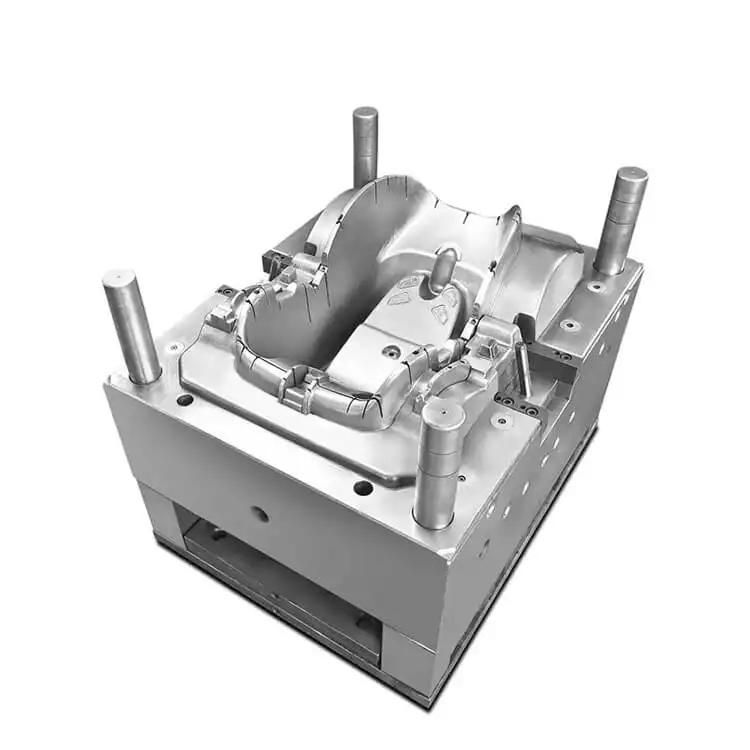
You need a reliable decision framework to choose the right tooling strategy. This choice depends entirely on your business goals. You must weigh speed-to-market against long-term unit economics.
Table: Comparison of Rapid and Production Tooling Strategies
Feature | Rapid Tooling | Production Tooling |
|---|---|---|
Typical Lead Time | 2 to 4 Weeks | 6 to 12+ Weeks |
Primary Material | Aluminum (e.g., Alumold) or Mild Steel | Hardened Steel (e.g., H13, S7) |
Typical Volume | 100 to 10,000 Units | 100,000 to Millions of Units |
Automation Level | Minimal (Manual inserts common) | Fully Automated (Sliders, auto-ejection) |
Best Use Case | Prototyping, Market Testing, Bridge Production | Long-term Manufacturing, Lowest Cost-per-part |
Fast product iterations often require rapid tooling. You should use this approach for prototyping, initial market testing, or low-volume bridge production. It safely yields 100 to 10,000 units before showing wear.
Characteristics include softer base materials. Manufacturers usually mill these from aircraft-grade aluminum or mild steel. They typically feature single-cavity designs and utilize minimal automation. You might manually load inserts rather than paying for complex mechanical sliders.
Limitations certainly exist. Aluminum offers lower tool life. It cannot handle highly abrasive glass-filled resins over long production runs. The softer metal will wear down quickly, altering your part dimensions and degrading cosmetic finishes.
Scale demands rugged durability. Custom mold tooling targets high-volume production. Use this method for long-term manufacturing spanning millions of cycles. It ultimately yields the lowest cost-per-part over the product life cycle.
Characteristics include incredibly durable materials. Manufacturers use hardened steel like H13 or S7. These tools feature multi-cavity layouts and fully automated runner and ejection systems. They run autonomously for days without human intervention.
This scalability outcome takes much longer upfront. However, it drastically reduces cycle time and part cost at scale. You sacrifice early speed to guarantee long-term operational efficiency.
Standard sales pitches often ignore realistic risks. Building operational trust requires highlighting these hidden bottlenecks. You must anticipate delays to keep your launch calendar intact.
Incomplete CAD files frequently halt a project before any metal gets cut. Engineers find un-moldable features and request design changes. Slow client approvals drag out this phase for weeks.
You can mitigate this risk by defining strict communication protocols. Follow these actionable steps to accelerate DFM:
Establish a 24-48 hour SLA: Require engineering feedback and approval turnarounds within two business days on both sides.
Provide native CAD files: Always send STEP or IGES files alongside a detailed 2D PDF drawing calling out critical tolerances.
Empower a single decision-maker: Designate one lead engineer on your team to authorize design changes instantly without waiting for committee consensus.
Supply chain constraints easily blindside procurement teams. Unavailability of specialized tool steels adds weeks to the schedule. Exotic aerospace-grade aluminum blocks sometimes require long lead times just to arrive at the machine shop.
Production resins cause similar headaches. Custom-colored resins or specialized medical-grade polymers might face backorders. If the specific plastic isn't ready for the T0 trial, the finished steel simply sits idle on the shelf.
Many novice buyers assume the first shot yields a production-ready part. We call this the "T0 Trap." First samples almost always exhibit minor flaws. You might see flash, warp, or incorrect shrink rates.
Implementation Reality dictates cautious planning. Plan for T1 and T2 refinements as a standard part of your baseline timeline. Toolmakers need time to dial in dimensions, adjust gates, or polish textures. Treat sample iteration as a mandatory phase, not an unexpected exception.
You need strong shortlisting logic to vet potential vendors accurately. Spotting unrealistic promises early saves you from missed deadlines and costly rework later.
Always interrogate a vendor's internal setup. Do they have dedicated, in-house CNC and EDM machines? Are they simply brokering the work to smaller sub-contractors?
In-house equipment dramatically reduces queue delays. If a manufacturer controls their own shop floor, they can shift schedules to accommodate urgent fixes. Brokers must wait in line behind other clients, destroying your timeline predictability.
Vague terminology obscures the true calendar. You must clarify exactly when the quote begins measuring time. Does the clock start from PO issuance, initial CAD approval, or the moment the deposit clears their bank?
Furthermore, define the finish line. Does the lead time end at internal "tool completion"? Or does it end upon the physical delivery of your approved T1 samples? Clarifying these milestones prevents frustrating arguments weeks into the project.
A machine shop cannot bend the laws of physics. Ask them about their current spindle utilization rates. A shop already operating at 95% capacity cannot realistically expedite your order.
If they promise lightning-fast delivery while fully booked, they will either broker the job out or charge you steep, hidden premiums for weekend overtime. Demand capacity transparency before signing the contract.
Injection mold delivery duration is never an arbitrary number. Toolmakers calculate it meticulously based on material hardness, part complexity, and expected production volume. Open communication during the design phase remains your strongest defense against schedule slip.
Prioritize Phase Zero: Lock in your CAD and finalize DFM before counting the days on your calendar.
Look Beyond the Quote: Do not select a tooling partner based solely on the shortest quoted duration. Unrealistic timelines inevitably lead to rushed engineering, poor tool quality, and incredibly costly rework.
Align Strategy with Scale: Choose rapid aluminum setups for immediate testing, but commit to hardened steel for long-term scalability.
You can secure an accurate timeline today. Prompt your team to submit your current 3D CAD file to a trusted partner for a comprehensive DFM analysis and an honest, data-backed lead time assessment.
A: Yes, you can expedite the timeline through two primary methods. First, you can pay expedited fees to cover weekend or overnight machining shifts. Second, you can actively simplify the part design. Reducing complex undercuts and opting for simpler, standard surface finishes drastically shortens required machining and polishing hours.
A: Indirectly, yes. Highly corrosive or abrasive resins, like PVC or 30% glass-filled nylon, require robust tooling. Your mold must be manufactured from harder, wear-resistant steel like fully hardened H13. This specific material takes significantly longer to cut, EDM, and heat-treat compared to standard pre-hardened metals.
A: T0 (Test 0) is the very first physical plastic part shot from your newly completed tool. Engineers use this initial sample to evaluate the tool's performance. It helps them identify any necessary dimensional tweaks or cosmetic adjustments before you grant final production approval.


