


Views: 0 Author: Site Editor Publish Time: 2026-09-22 Origin: Site


Procurement and engineering teams frequently face a tough manufacturing dilemma. Custom precision tooling requires significant upfront capital expenditure. It also demands much longer lead times compared to standard off-the-shelf molds. You must clearly understand the boundary between standard commercial molding and true precision molding. True precision manufacturing enforces strict tolerances tighter than ±0.002 inches or ±0.05 mm. Crossing this technical boundary dictates serious financial and operational commitments. Standard molds simply cannot handle extreme engineering demands. You will learn how to justify this strategic business decision using pure unit economics. We will explore strict regulatory compliance factors and high-volume consistency requirements. Finally, you will discover how to thoroughly evaluate manufacturing capabilities before cutting any steel. Requesting this specialized tooling is a complex strategic choice. We will guide you through making the right call for your product line.
You must know when standard tools suffice. They work exceptionally well for rapid prototyping phases. They suit low-fidelity consumer goods perfectly. Short production runs often rely on them to save initial capital. Transparency in manufacturing builds trust between buyers and suppliers. You save money initially by choosing lower-class aluminum tools. We often recommend standard tooling for market testing.
However, demanding projects push lower-class molds past their breaking point. Hidden costs quickly destroy your project budget. Using inadequate tooling causes extremely high scrap rates. You will face frequent part rejections during quality control. Parts suffer from severe flashing and unpredictable warping. They experience inconsistent shrinkage across different batches. You then face expensive secondary machining. Your team must manually correct dimensions to salvage the parts. This manual labor destroys your profit margins.
Furthermore, premature tool wear forces unexpected production downtime. You lose money every minute the injection presses stop. When you process abrasive materials through soft aluminum tools, the gates wear out rapidly. The parting lines degrade within a few thousand cycles. You soon realize cheaper tooling creates a false economy. True mass production requires durable, hardened steel solutions. Understanding this breaking point helps you justify a larger upfront investment.
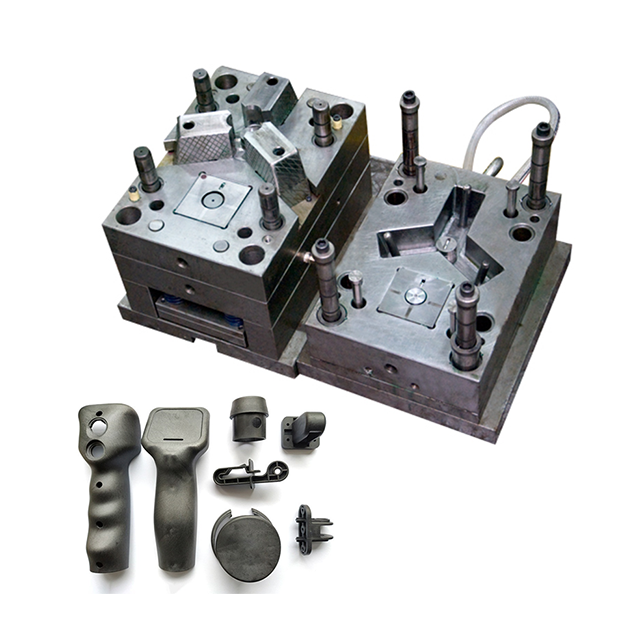
Some engineering projects leave absolutely no room for error. You need specialized manufacturing solutions to guarantee success. We have identified four primary scenarios requiring advanced custom tooling. You must upgrade your tooling strategy if your project falls into these categories.
You must secure a high precision plastic injection mold for parts demanding microscopic accuracy. These components often feature extremely thin walls. They include complex undercuts and dense micro-features. Dimensional stability remains strictly non-negotiable here. Even a microscopic deviation causes assembly failures downstream. Standard molds simply cannot maintain these tight dimensional boundaries consistently.
Healthcare applications demand zero defects and absolute purity. Processing specialized medical plastic requires strict adherence to FDA guidelines. You must follow ISO 13485 standard protocols rigorously. Cleanroom environments dictate how you handle these sensitive resins. Biocompatible polymers must behave predictably under intense pressure. They cannot suffer from foreign contamination. They must avoid structural weakness entirely. Standard tooling cannot guarantee this level of sanitation and precision.
Scaling global production requires absolute operational repeatability. You need authentic SPI Class 101 molds for this task. Toolmakers build these robust molds for over one million cycles. Cavity 1 and Cavity 32 must produce mathematically identical parts every time. This consistency prevents massive assembly line shutdowns. When dimensions vary between cavities, you waste valuable materials. High-class tooling ensures uniform pressure and cooling across all cavities.
Engineering-grade polymers perform under extreme environmental conditions. Materials like PEEK, Ultem, or glass-filled nylon require high processing temperatures. You must use specialized thermal cooling channels. The toolmaker must machine hardened steel components. Standard aluminum tools fail immediately under these abrasive conditions. Extreme resins degrade soft molds within days. Custom precision tooling handles the thermal shock effortlessly.
Buyers must lock down technical benchmarks early in the process. You should clearly define these criteria before requesting any quotes. Precise technical documentation prevents miscommunication and delays. We strongly advise engineering teams to create comprehensive requirement sheets.
You must evaluate four core specifications. These elements dictate your final tooling success. We outlined these critical components below.
Locking down your exact precision plastic mold specifications prevents costly rework. You avoid paying for unnecessary modifications later.
Tool Steel Grades vs. Resin Types Matrix
| Steel Grade | Hardness (HRC) | Best Used For |
|---|---|---|
| P20 | 28-32 | Medium-volume, non-abrasive commodity plastics. |
| H13 | 48-52 | High-volume, moderate heat applications. |
| S7 | 54-56 | High-impact moving mechanisms and lifters. |
| 420 Stainless | 50-54 | Corrosive medical resins requiring cleanroom environments. |
Let us address the harsh cost realities frankly. A custom precision plastic mold costs substantially more upfront. It also takes several extra weeks to engineer and fabricate. You must look past the initial invoice. You must calculate the long-term unit economics carefully. This strategic mindset changes how you view procurement.
First, precision tooling eliminates expensive downstream labor. You no longer need manual deflashing operators on the floor. Parts eject perfectly formed from the press. They require zero secondary trimming or buffing. You save thousands of labor hours annually. This automation streamlines your entire supply chain.
Next, consider the extreme thermal efficiency. Optimized conformal cooling channels reduce cycle times by precious seconds. Saving just five seconds per cycle matters immensely. It drastically lowers your cost-per-part during high-volume runs. Over a million cycles, those saved seconds translate into weeks of freed machine time. You effectively increase your factory capacity without buying new presses.
Finally, compare overall tooling lifespans. One highly durable Class 101 mold outlasts multiple lower-grade tools easily. You save significant capital over the product lifecycle. You avoid the hidden costs of tool maintenance and emergency repairs. The heavy initial expense easily pays for itself through pure reliability. You secure a profitable, predictable manufacturing operation.
Choosing a reliable manufacturing partner introduces significant risk. You need a solid risk mitigation framework to protect your investment. This structured checklist helps you separate legitimate toolmakers from standard injection shops. Not every supplier can deliver microscopic tolerances.
Every reliable precision plastic mold supplier must pass these strict evaluation criteria:
Do not skip these vetting steps. Visiting their facility provides immense insight into their operational cleanliness. A well-maintained shop floor usually indicates superior toolmaking practices.
Custom tooling remains a heavy strategic investment. However, it significantly reduces your overall manufacturing risks. It guarantees superior product quality from the first shot to the millionth. It drives long-term profitability through massive scale and consistency.
You should now take immediate strategic action. Gather your updated 3D CAD files today. Document your exact material requirements clearly. Calculate your estimated annual usage (EAU) accurately. Submit these organized documents to your chosen supplier for a formal Design for Manufacturing (DFM) review.
A: Typically, production volumes exceeding 50,000 to 100,000 units annually justify the capital expenditure. However, highly complex or high-value components easily justify this upfront cost at much lower volumes.
A: Lead times generally range from 4 to 12 weeks. The exact timeline depends heavily on geometric complexity, chosen steel hardness, and the specific SPI mold class required by your project.
A: In standard reputable agreements, you own the tool completely once fully paid. The supplier simply maintains and stores it for production runs. You must always verify these ownership terms strictly in your contract.
A: It depends on the specific change requested. Removing plastic from the part requires adding steel to the mold, which is difficult. Adding plastic means removing mold steel, which is generally feasible but incurs machining costs and production downtime.


