


Views: 0 Author: Site Editor Publish Time: 2026-07-30 Origin: Site


Most plastic parts look simple after production. Yet their shape, strength, and finish depend on many controlled decisions. Plastic injection molding combines design, tooling, heat, pressure, cooling, and inspection. In this guide, you will learn how it works, what affects results, and when it fits.
● Plastic injection molding melts plastic resin and injects it into a precision metal mold. The material then cools into the required shape.
● The complete project begins before molding. It often includes product design, prototyping, material selection, DFM analysis, mold design, and tooling.
● A standard molding cycle includes clamping, injection, packing, cooling, mold opening, and part ejection.
● Part quality depends on wall thickness, draft angles, gate placement, mold cooling, resin behavior, and stable machine settings.
● Common materials include PP, PE, ABS, PC, POM, PA66, PPS, TPU, TPE, and high-performance engineering plastics.
● The process can produce industrial housings, protective covers, handles, gears, brackets, transparent parts, and complex functional components.
● Tooling creates a higher starting cost. However, the cost per part often decreases as production volume increases.
● Plastic injection molding is usually best for repeatable parts, complex geometry, stable designs, and medium-to-high production volumes.
Plastic injection molding is a manufacturing process for making solid plastic parts. Plastic pellets enter a heated barrel, where they soften and melt. A machine then pushes the molten material into a closed metal mold.
The material fills the internal cavity and copies its shape. After cooling, the mold opens and releases the finished part. This cycle can repeat many times under controlled conditions.
Three elements control the process. The resin provides the required physical and visual properties. The mold creates the shape, dimensions, surface texture, and functional details.
The injection molding machine controls temperature, pressure, speed, clamping force, and cycle time. Poor coordination between these elements may cause defects, unstable dimensions, or slow production.
The process supports both simple and complex products. Common examples include machine housings, control covers, equipment handles, clips, brackets, connectors, gears, and electrical enclosures.
It can also produce high-gloss transparent parts for inspection windows or control panels. Industrial product portfolios often include functional components, protective covers, precision molds, clear parts, and molded handles.
Plastic injection molding involves more than filling a mold. A successful project normally moves through design validation, tooling, sampling, production, finishing, and inspection.
The process begins with the part’s intended function. Engineers review its dimensions, loads, working temperature, chemical exposure, appearance, and assembly needs.
Design for manufacturability, or DFM, identifies risks before mold production. The review examines wall thickness, draft, ribs, bosses, undercuts, parting lines, and gate locations.
Consistent walls usually improve filling and cooling. Draft angles help the finished part leave the mold without damage. Unnecessary undercuts can increase mold complexity and cost.
A prototype helps verify size, fit, function, and assembly. Teams may use 3D printing before investing in production tooling.
After validation, mold engineers create the cavity, core, runners, gates, vents, cooling channels, and ejection system. Mold-flow analysis can predict filling patterns, pressure needs, weld lines, air traps, sink marks, and possible warping.
The reviewed company workflow includes 3D modeling, prototype verification, DFM reporting, mold-flow analysis, and detailed mold design.
Manufacturers create mold components through CNC milling, EDM, grinding, drilling, wire cutting, and polishing. They then assemble and test the mold.
Technicians install it inside an injection molding machine. They set the barrel temperature, mold temperature, injection speed, holding pressure, cooling time, and clamping force.
Machine size must match the part and mold. Too little clamping force may allow flash. Poor temperature control may cause incomplete filling or material damage.
Plastic pellets enter the machine through a hopper. A rotating screw moves them through a heated barrel. Heat and friction gradually turn the pellets into a consistent melt.
The machine closes and clamps the mold. The screw then moves forward, forcing molten plastic through the nozzle, runner, and gate. The material fills every available section of the cavity.
Thin walls and long flow paths may require higher pressure. However, excessive pressure can create stress, flash, or part damage.
Injection does not end when the cavity becomes full. The machine continues applying packing pressure for a short period. This step adds material as the plastic begins shrinking.
Cooling channels remove heat from the mold. The resin becomes solid enough to hold its shape. Wall thickness, resin type, mold temperature, and cooling design all influence this stage.
Cooling often takes a large part of the total cycle. Uneven cooling can create warping, sink marks, or unstable dimensions.
The mold opens after the part reaches a safe ejection temperature. Ejector pins, plates, or other systems push the part from the core.
Workers or automated equipment remove gates and runners when necessary. Quality teams inspect dimensions, surfaces, color, and assembly features.
Some products need painting, plating, logo printing, laser marking, ultrasonic welding, assembly, or packaging. Sample parts should be approved before mass production begins.
Tip:Provide the supplier with CAD files, annual volume, resin needs, tolerances, finish requirements, and working conditions before mold design.
The injection unit includes the hopper, heated barrel, screw, and nozzle. It prepares the resin and pushes it into the mold.
The clamping unit opens, closes, and holds the mold. Its force must resist the pressure created during injection. A control system manages temperatures, movement, pressure, speed, and cycle timing.
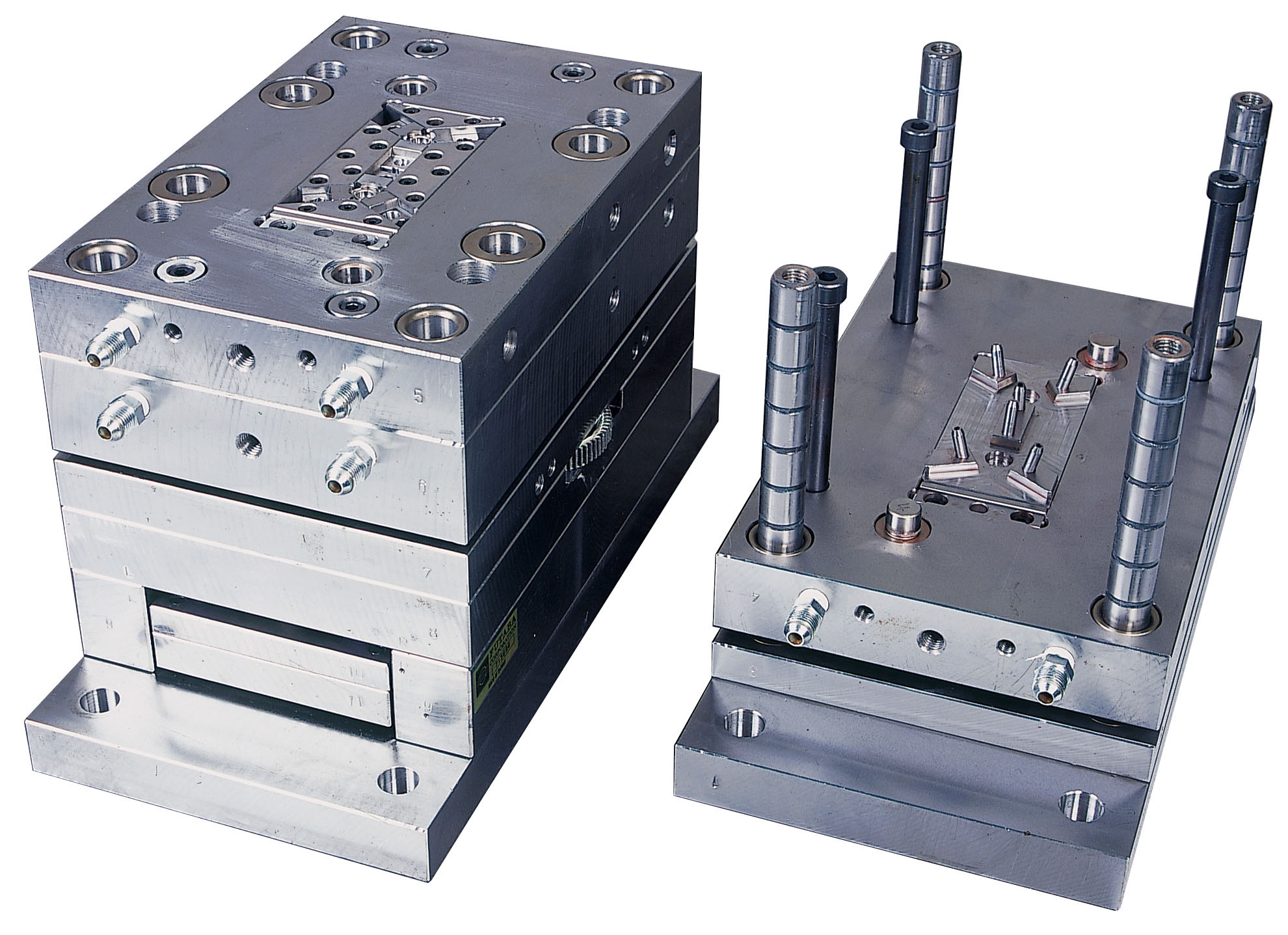
The core and cavity form the external and internal features. Runners move resin toward each cavity, while gates control its entry.
Vents allow trapped gases to escape. Cooling channels control solidification. Ejector pins release the finished part after cooling.
The mold may also include slides, lifters, inserts, or hot-runner components. These features support undercuts, complex geometry, or more efficient production.
Mold production requires precision machining and inspection equipment. CNC machines, EDM systems, grinders, and measuring tools help create accurate mold components.
Production may also use dryers, material mixers, temperature controllers, robots, conveyors, and testing equipment. These systems support stable material preparation, automated handling, and consistent inspection.
Commodity plastics often provide practical performance at a lower material cost. They suit packaging, simple covers, containers, and general-purpose components.
Engineering plastics provide stronger mechanical, thermal, chemical, or dimensional performance. They may be necessary for gears, structural brackets, machine components, connectors, or high-temperature parts.
Material | Useful properties | Common applications |
ABS | Impact resistance and good surface quality | Housings, handles, covers, and enclosures |
PP | Chemical resistance and low density | Containers, clips, covers, and flexible features |
PE or HDPE | Toughness and chemical resistance | Protective parts, packaging, and industrial components |
PC | Strength, durability, and transparency | Clear covers, panels, lenses, and guards |
POM | Low friction and dimensional stability | Gears, rollers, guides, and moving parts |
PA66 | Strength and wear resistance | Brackets, connectors, and structural components |
TPU or TPE | Flexibility and grip | Seals, cushions, grips, and soft-touch areas |
PPS or PEEK | High heat and chemical resistance | Demanding industrial and technical parts |
The reviewed industrial product range supports common resins and several engineering materials. It also includes options for rigid, flexible, transparent, structural, and heat-resistant applications.
Start with the part’s real operating conditions. Consider load, impact, temperature, chemicals, moisture, sunlight, flame requirements, transparency, and flexibility.
You should also review shrinkage, flow behavior, surface quality, color, and expected service life. Additives may improve UV resistance, flame performance, stiffness, conductivity, or appearance.
Material selection must happen before final mold approval. Each resin flows, shrinks, cools, and releases differently.
Note:Confirm the exact resin grade, additives, color standard, test method, and required compliance documents before production.
A stable mold and process can produce the same geometry through many cycles. This repeatability helps maintain dimensions, assembly fit, appearance, and performance.
It also supports reliable production planning. Automated part handling can further improve speed and consistency.
The process can form ribs, bosses, clips, threads, textures, logos, and mounting features. Designers can combine several functions inside one molded component.
Integrated features may replace screws, brackets, or separate covers. This approach can reduce assembly work and simplify the supply chain.
Injection molds require an initial investment. The mold must be designed, machined, assembled, tested, and adjusted.
Once production stabilizes, each cycle can create one or several finished parts. Multi-cavity molds can increase output and spread tooling costs across more units.
Therefore, the cost per part often falls as order volume grows.
Manufacturers can select rigid, flexible, transparent, reinforced, or high-temperature plastics. Mold polishing and texture can create glossy, clear, matte, or patterned surfaces.
Secondary services may add printing, painting, plating, welding, assembly, or packaging. Clear molded parts can support visual monitoring, display covers, and protective industrial windows.
Simple geometry usually requires simpler tooling. Undercuts, deep ribs, tight tolerances, and complex parting lines may require slides or additional mold actions.
Thick sections can cool slowly and create sink marks. Sharp thickness changes can increase stress and warping. Early DFM work helps remove these problems before machining begins.
Mold material, cavity count, cooling design, expected tool life, and runner type affect the tooling price. A short production program may not need the same mold construction as a long-term program.
Expected lifetime volume should guide this decision. Buyers should also consider maintenance, replacement inserts, spare components, and future design changes.
Part weight affects resin use. Cooling time affects machine capacity. Scrap, machine size, labor, inspection, finishing, assembly, and packaging also influence cost.
A cheap unit quote may exclude important work. A complete comparison should include tooling, samples, inspection, finishing, packaging, delivery, and ongoing quality support.
Common defects include flash, short shots, warping, sink marks, weld lines, burn marks, bubbles, and ejector damage. Their causes may involve design, tooling, material, or machine settings.
Mold-flow analysis can reveal risks before tooling. Sample approval, dimensional inspection, material verification, process monitoring, and controlled production help maintain consistent results.
Tip:Compare total project cost instead of unit price alone, especially when tooling, inspection, finishing, and assembly differ.
Plastic injection molding works well when the design is stable and repeatability matters. It also suits projects requiring complex geometry, integrated features, controlled surfaces, or consistent assembly fit.
Production volume must justify the mold investment. The process becomes more attractive when the same part will be ordered repeatedly.
3D printing builds parts layer by layer without a production mold. It is often useful for prototypes, design checks, low quantities, and fast product changes.
Injection molding needs more preparation and tooling investment. However, it usually provides faster repeat production, stronger process consistency, and lower unit costs at larger volumes.
Many successful projects use both methods. Teams print prototypes first, then move to molded production after design approval.
Thermoforming heats a plastic sheet and forms it over a mold. It often works well for larger, shell-like parts and simpler open shapes.
Injection molding forms molten resin inside a closed cavity. It supports detailed features on several surfaces, thicker structures, bosses, ribs, and precise assembly points.
The correct choice depends on shape, material, volume, surface needs, and target cost.
Plastic injection molding turns validated designs into repeatable parts through precise tooling and controlled production. Good results depend on resin choice, mold engineering, stable processing, cooling, and inspection. Dongguan Quanhao Plastic Mold Co., Ltd. supports custom industrial parts, molds, finishing, and assembly. Its flexible material and production support improves quality, consistency, and overall project value.
A: Plastic injection molding shapes molten resin inside a cooled metal mold.
A: Plastic injection molding melts, injects, cools, and ejects resin.
A: Plastic injection molding offers repeatability, speed, complex shapes, and scalable costs.
A: Cost depends on tooling, resin, volume, complexity, and finishing.
A: It usually suits larger volumes; printing suits prototypes.
A: Uneven walls, cooling, shrinkage, or pressure often cause warping.


