


Views: 0 Author: Site Editor Publish Time: 2026-09-18 Origin: Site


Overmolding failure is rarely a pure design flaw. Problems like delamination, severe warping, and structural weakness happen frequently. In most real-world applications, these failures stem directly from hidden material incompatibility. Selecting the wrong rigid substrate and flexible overmold pairing creates massive production friction. It drives up scrap rates noticeably. It delays critical market entries. Ultimately, a poor material match forces engineers into stressful and expensive redesigns. You must choose compatible resins to ensure long-term product viability.
This article provides a strict technical evaluation framework for selecting ideal material pairings. We will help you align essential performance requirements against demanding operational environments. You will learn how to validate chemical adhesion versus mechanical interlocking correctly. Furthermore, we will explain specific physical constraints during the secondary injection phase. Finally, you will learn how to thoroughly vet your manufacturing partners. By following this guide, you can eliminate guesswork and build highly functional, durable molded assemblies.
Poor material selection destroys product reliability entirely. Physical failures include poor adhesion and unpredictable sink marks. Substrates and overmolds separate under minor stress. Sink marks appear near thicker geometric sections. Stress cracking ruins overall structural integrity rapidly. These physical failures trigger severe financial consequences. Scrap rates spike during initial production runs. Brands face expensive product recalls later. Customer trust evaporates quickly when handles peel. Redesigning molds costs tens of thousands of dollars.
Achieving a true chemical bond is the most efficient outcome possible. Two compatible materials fuse at a molecular level. They share polymer chains across the boundary layer. This creates a permanent, seamless attachment. It eliminates the need for complex tool modifications.
However, many excellent materials lack natural chemical affinity. Mechanical interlocking becomes a necessary fallback here. You must engineer specific physical features into the rigid substrate. These features capture the flexible overmold physically.
Engineers often face serious implementation risks regarding melt temperatures. Injecting a high-temperature elastomer over a low-temperature rigid plastic is dangerous. The secondary injection phase carries immense thermal energy. This heat can melt the structural substrate easily. Substrate deformation destroys the dimensional accuracy of the part. You must ensure the rigid plastic withstands the secondary melt temperature. If it cannot, you must select alternative resins immediately.
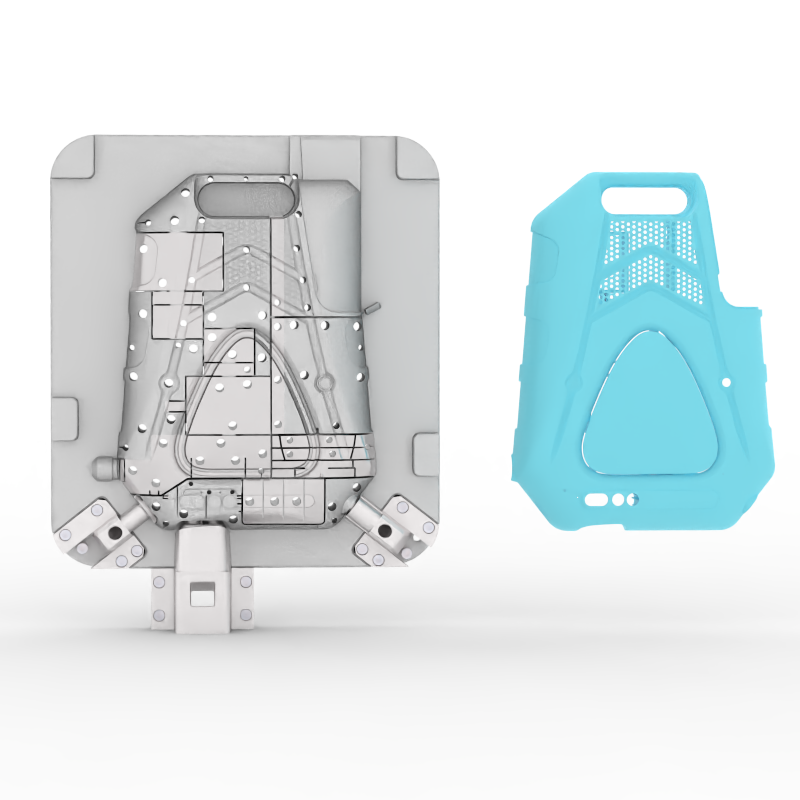
Polycarbonate (PC) and ABS serve as reliable structural foundations. They provide massive baseline impact resistance. Designers specify them heavily for consumer electronics and power tools. Fortunately, they are highly compatible with many TPU grades.
Nylon (PA) presents a significantly different challenge. It offers excellent tensile strength and durability. However, its slick surface resists chemical bonding notoriously. Standard elastomers will fail to adhere here. You must specify specialized, modified overmold grades for Nylon.
Thermoplastic Polyurethane (TPU) and TPE act as the functional layer. They are the standard for ergonomic grips. They provide excellent impact dampening properties. You must evaluate them based on specific Shore hardness. Also, you must verify their chemical affinity with the chosen substrate.
Liquid Silicone Rubber (LSR) provides superior performance layers. It resists high heat easily and safely. It suits critical medical applications perfectly. However, LSR requires very specific mechanical tooling. You must heat the mold for LSR injection. Simultaneously, you must cool the substrate itself. Proper surface preparation is mandatory before processing.
You must evaluate resin manufacturer data sheets prior to tooling development. Do not rely on generic compatibility charts exclusively. Create a strict checklist for your specific materials.
| Rigid Substrate Material | Flexible Overmold Layer | Chemical Bond Strength | Mechanical Interlock Requirement |
|---|---|---|---|
| Polycarbonate (PC) | Thermoplastic Polyurethane (TPU) | Excellent | Rarely Needed |
| Acrylonitrile Butadiene Styrene (ABS) | Thermoplastic Elastomer (TPE) | High | Optional (For extreme use) |
| Nylon (PA 6/66) | Standard TPE/TPU | Low | Strictly Required |
| Polypropylene (PP) | Liquid Silicone Rubber (LSR) | Very Low | Strictly Required + Primer |
Industrial settings expose products to harsh realities constantly. Oils, greases, and harsh cleaners attack soft elastomers. These chemicals degrade standard TPEs rapidly. When designing custom plastic injection parts for industrial applications, you must evaluate chemical resistance early. The flexible layer will swell, soften, or dissolve over time. You must select specialized fluoropolymers or resistant urethanes. They maintain their integrity during prolonged chemical exposure.
Automotive sectors demand extreme thermal resilience. Consider an automotive part facing direct sunlight daily. Temperatures swing wildly from -40°C to 85°C+. Materials must withstand these dramatic temperature swings. Unmatched shrink rates cause immediate delamination. The overmold shrinks and peels away from the substrate. Furthermore, prolonged UV exposure degrades material elasticity. UV stabilizers must be formulated into the raw elastomer.
You must verify compliance ratings at the material selection stage. Waiting until post-production is a massive operational risk. Medical devices require strict FDA-approved resins. European markets mandate strict RoHS compliance completely. Electronic enclosures demand validated UL flammability ratings. If your materials fail certification, your product cannot legally ship. Validating these factors early saves months of redesign time.
Engineers must finalize detailed overmolding parts specifications before cutting steel. Matching the volumetric shrinkage of both materials prevents warping. As the overmolding parts cool, they contract slightly. Both materials must cool and shrink synchronously. If they shrink at vastly different rates, internal stress builds. The final assembly will bend, warp, or crack aggressively. Careful resin selection mitigates this physical stress.
You must outline strict physical constraints regarding part geometry. Wall thickness influences flow length significantly. If the overmold material cools too quickly, problems arise. High viscosity materials lose heat rapidly during injection. They will not fill the mold cavity fully. This creates short shots and defective boundaries. Furthermore, premature cooling prevents an adequate chemical bond. You must maintain optimal thickness to sustain injection heat.
Theoretical material compatibility means nothing without physical validation. You must highlight the necessity of standardized testing. ASTM D903 is the industry standard Peel Test. It measures the exact force required to separate layers. Cross-hatch testing provides additional adhesion data visually. You must conduct these tests during the validation phase. They prove theoretical material compatibility holds up in reality. Prototyping single cavities confirms your assumptions accurately.
Evaluating your manufacturing partner determines your ultimate success. Assess whether they utilize dedicated two-shot molding equipment. Two-shot molding happens inside a single machine. It delivers high volumes efficiently. It achieves much stronger chemical bonds consistently. Alternatively, pick-and-place insert molding costs less upfront. An operator physically moves the substrate to another machine. However, it introduces higher manual handling risks. Surface contamination ruins chemical bonds easily.
A reliable overmolding parts supplier should not just accept designs blindly. They must possess deep material science capabilities. They should provide accurate mold flow analysis upfront. This software simulates heat and pressure distribution perfectly. Furthermore, they should offer data-backed alternative resin recommendations. If your chosen materials clash, they must suggest viable alternatives immediately.
Look for specific quality assurance checkpoints during facility audits. Basic visual checks are completely insufficient for complex assemblies. Advanced suppliers utilize thermal imaging during the cooling phase. This detects hidden internal stress points early. They also implement automated vision inspection systems. Cameras scan every part for microscopic flash or subtle delamination. Strong QA protocols guarantee consistent production batches.
Successful overmolding requires concurrent engineering of part design and material selection. You cannot finalize geometry without knowing your exact resins. Selecting incompatible materials destroys product viability and drains project budgets. By prioritizing chemical compatibility and shrink rates, you ensure durable outcomes. Properly vetted suppliers provide the data needed to make safe choices.
A: Delamination typically stems from chemical incompatibility between the substrate and elastomer. Improper mold temperatures prevent the materials from fusing at a molecular level. Additionally, surface contamination or the lack of proper mechanical interlocks leads to separation under stress.
A: No. Universal adhesion is a persistent myth. Polymers possess vastly different molecular structures and melt temperatures. You must rely on tested material compatibility matrices. Incompatible plastics require extensive surface preparation or complex physical undercuts to bond.
A: Yes. Hard-to-bond materials necessitate complex mold designs. If chemical adhesion fails, engineers must add mechanical undercuts or through-holes. These features require intricate mold actions, slides, or lifters. This complexity increases upfront CapEx significantly.


