


Views: 0 Author: Site Editor Publish Time: 2026-08-26 Origin: Site


Automotive manufacturing operates on a strict zero-margin-for-error reality. Subpar tooling translates directly to catastrophic assembly line downtime, expensive product recalls, and compromised passenger safety. Every millimeter of deviation risks derailing mass production schedules. Procurement and engineering teams frequently face a sharp disconnect during the sourcing phase. All too often, seemingly attractive upfront tooling quotes completely overshadow the critical need for long-term production reliability.
This article provides a hard-nosed, evidence-based framework for defining accurate requirements. We will show you exactly how to evaluate manufacturing partners and validate their engineering claims. You will learn to lock in lifecycle predictability and mitigate complex supply chain risks entirely. By understanding these technical benchmarks, you empower your team to build resilient, high-volume production lines that deliver flawless components year after year.
Tooling Grade Dictates ROI: Specify SPI Class 101 molds for high-volume automotive production to guarantee million-cycle durability.
Compliance is Non-Negotiable: Demand IATF 16949 certification and strict adherence to the Production Part Approval Process (PPAP).
Material Drives Design: Specifications must align mold design with advanced thermal and structural requirements, especially for metal-to-plastic lightweighting.
Supplier Vetting: A qualified automotive injection mold supplier must offer transparent Design for Manufacturability (DFM) and mold flow analysis prior to cutting steel.
When you initiate a new vehicle program, tooling decisions dictate your operational success. Clear documentation bridges the gap between engineering intent and manufacturing reality.
Under-specifying mold steel or ignoring advanced cooling channels creates a cascade of financial losses. Soft steel degrades quickly under the high injection pressures required for automotive components. This degradation leads directly to flashing, short shots, and unacceptable dimensional variation. You face cycle time bloat when inadequate cooling forces you to leave parts in the mold longer to prevent warpage. Over time, these inefficiencies generate massive scrap rates. You must document strict automotive injection mold specifications to prevent costly tool rework and avoid line stoppages.
You must tie mold cavitation and tool life expectations directly to your production forecasts. Prototyping a single-cavity mold behaves entirely differently than managing a 16-cavity tool running continuously for five years. If an automotive program forecasts three million units over its lifecycle, the mold must scale effortlessly. Planners often underestimate demand, forcing a medium-volume tool to work beyond its engineered limits. By accurately mapping program lifecycles to tooling architecture, you avoid emergency duplicate mold builds later.
Supply chain disruption remains a constant threat in the automotive sector. Strict specification documentation acts as your primary defense. If a supplier fails, having comprehensive tooling drawings, material certificates, and cooling schematics allows you to relocate the mold quickly. Without these detailed records, transitioning a tool to a new facility becomes a prolonged engineering nightmare. You reduce this risk by owning the data upfront.
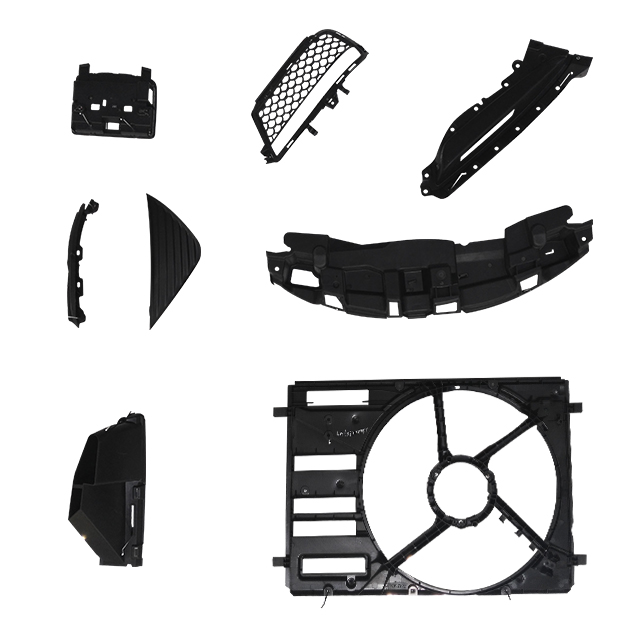
The physical construction of your tooling determines part consistency. You cannot negotiate with physics. High-pressure injection demands robust, unyielding steel.
Tool steel selection separates prototypes from legacy production components. For lower volumes or pre-production validation, P20 steel offers a cost-effective solution. It machines easily but lacks long-term wear resistance. However, high-volume programs require premium hardened metals. We specify H13 or S7 tool steel for aggressive, abrasive resins like glass-filled nylon. These hardened materials resist the sheer stress of million-cycle runs.
You must define Rockwell Hardness (HRC) expectations based on the intended lifecycle of the automotive part. P20 generally hovers around 28-32 HRC. Conversely, hardened H13 should reach 48-52 HRC. This hardness differential dictates whether your gates wear out after three months or last for half a decade.
The Plastics Industry Association (formerly SPI) provides clear classifications to standardize mold longevity. You need to leverage these guidelines when negotiating with tooling engineers.
Standard SPI Mold Classification Comparison
SPI Class | Expected Cycles | Typical Steel Grade | Primary Automotive Use Case |
|---|---|---|---|
Class 101 | 1,000,000+ | Hardened (H13, S7) | High-volume interior trim, under-hood parts |
Class 102 | Up to 1,000,000 | Pre-hardened (P20), Hardened inserts | Medium-volume structural components |
Class 103 | Under 500,000 | Pre-hardened (P20) | Low-volume specialty vehicles, aftermarket |
High-tier automotive programs inherently require Class 101 specifications. These tools feature guided ejection systems, wear plates, and optimized temperature control lines. They demand a higher initial investment but yield the lowest cost-per-part over a multi-year run.
Complex automotive geometries require strict geometric dimensioning and tolerancing (GD&T). You must outline specific datum structures to ensure the part mates perfectly within the vehicle assembly. Modern tooling relies heavily on conformal cooling channels. Unlike traditional straight-drilled lines, conformal cooling follows the exact contour of the cavity. This technology maintains rapid dimensional stability. It significantly reduces cycle times by pulling heat away uniformly, preventing structural warpage in tight-tolerance areas.
When engineering custom injection molding parts for automotive applications, raw material drives the physical mold design.
Modern vehicles rely on high-performance thermoplastics to survive extreme environments. You must evaluate polymers based on rigorous operational criteria. For engine bays, materials like PEEK and PA66 provide exceptional heat deflection properties. For dashboards and consoles, ABS/PC blends offer superior impact resistance and aesthetic finish.
Key metrics you should clearly specify include:
Tensile strength: Ensures the component withstands mechanical stress without yielding.
Impact resistance: Critical for crash-safety components and exterior bumpers.
Thermal deflection temperature: Prevents under-hood components from melting near engine blocks.
UV stability: Protects interior trims from sun degradation over a ten-year vehicle lifespan.
The aggressive shift toward electric vehicles (EVs) makes lightweighting a paramount priority. Removing weight directly increases battery range. This transition necessitates advanced metal-to-plastic conversions. Structural brackets, oil pans, and battery housings previously stamped from steel now utilize glass-filled or carbon-fiber-reinforced polymers.
These abrasive composites require substantial mold design adjustments. They exhibit unique shrinkage rates. You must engineer specialized gating strategies to prevent fiber breakage during injection. A poorly placed gate will compromise the structural integrity of a load-bearing plastic component.
In the automotive sector, quality cannot be inspected into a part after the fact. It must be engineered into the process from day one.
Partnering with a facility lacking proper certification introduces unacceptable operational risk. An automotive injection mold supplier must hold baseline ISO 9001 and advanced IATF 16949 certifications. IATF 16949 specifically mandates continuous improvement, defect prevention, and variation reduction in the automotive supply chain. Without it, you expose your program to unchecked manufacturing deviations.
You must specify requirements for Level 3 Production Part Approval Process (PPAP) submissions. This framework serves as proof that the supplier understands your engineering records and can meet them reliably. A Level 3 submission requires 18 distinct elements. It includes a comprehensive Failure Mode and Effects Analysis (FMEA) to identify potential tooling risks early. It also mandates robust Control Plans to dictate exactly how line operators monitor critical dimensions during mass production.
Do not accept manual caliper measurements for complex automotive profiles. Set strict expectations for supplier metrology capabilities. They must utilize Coordinate Measuring Machines (CMM) for precise volumetric assessments. We highly recommend 3D laser scanning for sweeping, organic surface checks on exterior trim. Automated Optical Inspection (AOI) provides essential high-speed validation for surface defects, ensuring aesthetic parts meet visual standards before shipping.
Selecting the right partner goes far beyond comparing bottom-line numbers. You need an engineering counterpart who challenges your assumptions.
Look for suppliers who actively push back on flawed designs. A silent partner is a dangerous partner. You should expect a mandatory Moldflow analysis prior to any steel being cut. This simulation software identifies weld lines, predicts air traps, and highlights potential warpage zones. Resolving these issues digitally costs nothing. Fixing them after the mold is built costs tens of thousands of dollars.
You must know how to read an injection molding quote properly. Always demand that suppliers separate Non-Recurring Engineering (NRE) tooling costs from the ongoing piece-part price. Amortizing tool costs into the piece price creates accounting blind spots later. Evaluate the true lifecycle costs rather than just the lowest initial bid. Factor in guaranteed tool maintenance schedules, strict scrap limits, and guaranteed cycle times. A cheaper tool that runs 10 seconds slower per cycle will cost you exponentially more over a three-year production schedule.
Use this rapid 5-point checklist for final evaluation:
In-house tooling capability: Do they repair molds on-site, or ship them out during a breakdown?
Material tracing systems: Can they track a specific resin batch to a specific day of production?
Proven track record: Do they have active case studies with specific automotive components similar to yours?
Financial stability: Does the supplier have the capital to survive industry downturns without cutting corners?
Contingency planning: What is their exact protocol if a primary molding press goes offline?
Precise specifications stand as the foundation of profitable, risk-free manufacturing. Vague requirements lead directly to misaligned expectations, budget overruns, and delayed launches. When you engineer a high-performance automotive injection mold, every variable counts.
Do not compromise on tooling steel, SPI class categorizations, or supplier compliance credentials simply for the sake of short-term budget cuts. The physics of injection molding will relentlessly punish cheap steel and poor thermal design. Protect your production lines by demanding rigorous DFM processes, IATF 16949 compliance, and exhaustive mold flow validation.
Take control of your manufacturing future today. We encourage you to download a comprehensive specification checklist or submit your 3D CAD files for a rigorous DFM review and an itemized tooling quote. Secure your supply chain before production ever begins.
A: The standard tooling life depends heavily on its SPI classification and steel grade. SPI Class 101 molds, built with hardened steel like H13, are designed to exceed 1 million cycles. Lower classes, like Class 103 built with pre-hardened P20 steel, typically last under 500,000 cycles. Proper preventative maintenance schedules dictate whether the tool achieves its maximum engineered lifespan.
A: Abrasive materials, such as glass-filled nylon or carbon-fiber composites, aggressively wear down tool steel. Processing these resins requires harder, more expensive tool steel and specialized, wear-resistant gating systems. This necessity significantly increases upfront tooling investments while concurrently driving up the unit cost due to the higher price of advanced thermoplastic resins.
A: IATF 16949 represents the global quality management standard specifically engineered for the automotive industry. It moves beyond basic quality control to enforce continuous defect prevention and the absolute reduction of variation in the supply chain. Partnering with a certified supplier guarantees they utilize rigorous, audited systems to protect your mass production runs.
A: A comprehensive RFQ must include final 3D CAD files, exact material specifications, and estimated annual usage (EAU). You must clearly state your expected tool life (SPI class), specific surface finish requirements (such as SPI or VDI standards), and the necessary PPAP level requirements for part approval.


