


Views: 0 Author: Site Editor Publish Time: 2026-06-24 Origin: Site


Manufacturing complex components is a high-stakes reality. Tight tolerances mean the difference between a functional medical device and a costly recall. A single dimensional deviation can halt an aerospace assembly line entirely. So, what exactly defines a high precision plastic injection mold? These advanced tools routinely handle tight tolerances of +/- 0.001 inches. They reliably produce intricate micro-features while maintaining stringent repeatability across millions of cycles. You must navigate a difficult business reality, though. High precision requires significantly higher upfront capital. It also involves longer lead times. This guide clarifies exactly when you should justify this investment. We will explore how to evaluate tooling viability, design for manufacturability, and select the best manufacturing partner. You will learn actionable steps to mitigate risks and secure consistent, high-quality production.
Precision is a System, Not Just a Tool: True precision relies on a combination of scientific molding principles, rigorous DFM, and advanced steel selection.
The Cost-Tolerance Tradeoff: Specifying tighter tolerances than necessary exponentially increases tooling costs; ROI depends on strict application requirements (e.g., medical, optical, automotive).
Vetting is Critical: Evaluating a plastic mold maker requires looking beyond quotes to their metrology capabilities (CMM, CT scanning) and quality control frameworks (ISO 13485, tight CPK metrics).
Dimensional tolerance thresholds clearly separate standard equipment from precision systems. Standard tools usually accommodate tolerances around ±0.005 inches. This range works perfectly well for basic consumer goods. It suits standard enclosures and non-critical structural components. However, precision tooling must hold strict tolerances from ±0.002 down to ±0.001 inches. Micro-molding applications demand even tighter dimensional controls.
Business success criteria dictate which approach you must take. Standard tools often fail in demanding, high-stakes environments. You need extreme accuracy for intricate mating parts. Reliable fluid seals and optical clarity components require perfect surfaces. Gear teeth also need absolute dimensional stability to function smoothly without premature wear.
Paying 30-50% more for upfront tooling reduces your downstream expenses significantly. Higher precision yields drastically lower scrap rates. It eliminates the need for costly secondary machining operations entirely. You will also achieve much higher automated assembly yields. Perfect parts prevent jammed automation lines. They keep your production moving smoothly.
Comparison Chart: Standard vs. Precision Injection Molds |
||
Feature / Metric |
Standard Mold |
High Precision Mold |
|---|---|---|
Typical Tolerances |
±0.005 inches |
±0.001 to ±0.002 inches |
Tooling Cost |
Baseline |
30% - 50% Higher Premium |
Machining Methods |
Standard CNC |
High-speed CNC, Wire EDM |
Ideal Applications |
Housings, consumer goods, toys |
Medical devices, optics, gears |
Scrap Rate Impact |
Moderate to High |
Extremely Low |
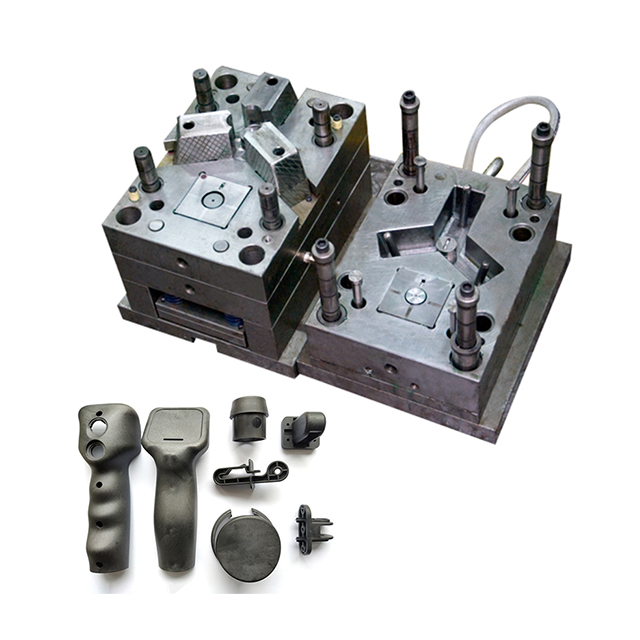
Building a highly reliable industrial mold design starts deep inside the initial engineering phase. Steel selection dictates the fundamental rigidity of the tool. You must use premium, high-grade tool steels like H13 or S7. These hardened materials effectively prevent core deflection during high-pressure injection. They maintain their structural and dimensional integrity over millions of production cycles.
Advanced thermal management is equally critical for success. Traditional straight-line cooling channels often fail to cool complex geometries evenly. Conformal cooling channels solve this problem. They hug the intricate part geometry closely. They pull heat away evenly across the entire surface. Consistent cavity temperatures remain absolutely non-negotiable. Uneven cooling causes warp, sink marks, and unpredictable shrinkage.
Scientific molding principles remove operator guesswork from the equation entirely. Engineers embed highly sensitive transducers directly into the tool steel. These sensor-equipped systems measure cavity pressure and melt temperature in real time. Processors use this accurate data to guarantee exact batch-to-batch repeatability. Science replaces outdated trial and error methods. You secure a reliable, data-driven manufacturing process.
Every custom plastic mold requires extremely rigorous Design for Manufacturability (DFM) analysis. The underlying part geometry dictates your ultimate molding success.
Wall thickness and gating strategies must be perfected first. Variations in nominal thickness compromise part precision immediately. Thick sections sink while cooling, and thin sections freeze off too quickly. You should aim for a uniform wall thickness whenever possible. Strategic gate placement minimizes internal shear stress. It also eliminates visible flow marks on cosmetic surfaces.
Managing draft angles and ejection presents unique engineering challenges. Standard draft tapers might interfere with your functional part geometry. You must balance mold release requirements against tight dimensional limits. High-quality surface finishes can sometimes reduce the draft requirement slightly.
Shrinkage predictability demands absolute data accuracy before cutting any steel. You must follow a strict evaluation process:
Classify the specific resin grade and manufacturer correctly.
Differentiate clearly between amorphous and semi-crystalline polymer behaviors.
Analyze exact material batch data to understand flow characteristics.
Calculate specific, localized shrink rates for different part features.
Apply these modified dimensions to the final tooling CAD model.
Selecting a capable plastic mold maker demands extreme scrutiny. A manufacturing vendor is only as good as what they can accurately measure. Look deeply into their robust metrology and inspection capabilities. You need a partner equipped with advanced, in-house Coordinate Measuring Machines (CMM). They should also utilize automated vision systems. They must demonstrate rigorous first article inspection (FAI) protocols.
Process validation protocols separate true engineering experts from amateurs. Insist on proven decoupled molding expertise. Require strict IQ/OQ/PQ validation frameworks. These stand for Installation Qualification, Operational Qualification, and Performance Qualification. These stringent standards ensure full medical or automotive industry compliance. They prove the process remains stable over time.
Consider the significant difference between in-house and outsourced operations. Keeping tooling operations under one roof mitigates immense project risk. A partner handling tool design, precision machining, and initial sampling internally maintains tighter control. Engineering communication flows much better. Adjustments happen significantly faster. You avoid the costly delays associated with shipping heavy steel across borders for minor corrections.
Investing in a precision mold carries specific implementation risks. Over-tolerancing stands out as the most common financial trap. Applying blanket tight tolerances to an entire CAD model skyrockets your costs unnecessarily. You force the toolmaker to EDM and wire-cut non-critical features. You should only apply strict tolerances to critical-to-function dimensions.
Maintenance realities also shift dramatically with precision tools. High accuracy means much narrower margins for mechanical wear. A rigorous preventative maintenance schedule keeps the tool flashing-free. You must follow strict upkeep routines:
Clean micro-vents daily to prevent trapped gas burns.
Inspect critical parting lines microscopically every week.
Lubricate moving slides and lifters carefully to avoid part contamination.
Tear down and ultrasonically clean the entire assembly regularly.
Material limitations play a massive role in final accuracy. Not all resins can physically hold tight tolerances. Unfilled polypropylene moves unpredictably during the cooling phase. Conversely, glass-filled PEEK provides excellent dimensional stability under high heat. You must acknowledge a hard manufacturing truth. Even the best injection tooling cannot fix fundamentally unstable material chemistry.
Moving forward requires aligning your part geometry, resin selection, and capital budget perfectly. You must short-list vendors who demonstrate measurable engineering rigor. Look for partners who utilize scientific molding and advanced metrology. Prepare thoroughly before initiating any Request for Quote (RFQ).
Provide complete, native 3D CAD models. Supply detailed 2D drawings clearly marking all Critical to Quality (CTQ) dimensions. Detail your projected annual volumes accurately, as this dictates the necessary steel hardness and cavity count. These careful preparation steps ensure you receive accurate pricing. They establish a foundation for a highly capable, long-term manufacturing partnership.
A: A precision tool typically costs 30% to 50% more than standard tooling. The price increase stems from utilizing premium hardened steels, advanced conformal cooling, and slower, highly accurate EDM machining. However, this upfront investment rapidly pays for itself by drastically reducing scrap rates and eliminating costly secondary machining operations over the product's lifespan.
A: You should expect realistic timelines of 6 to 12 weeks. Precision tooling requires meticulous design reviews and mold flow analysis. The actual cutting process takes longer because machinists use slower feed rates to achieve superior surface finishes. Tight-tolerance wire EDM and multi-axis CNC operations simply cannot be rushed without compromising final accuracy.
A: No. The injection press must match the high precision of the tool. Hydraulic machines often fluctuate slightly in pressure. You typically require all-electric or advanced hybrid injection molding machines. These presses provide the tight shot-to-shot consistency, exact injection speeds, and stable holding pressures necessary to replicate micro-features perfectly.


