


Views: 0 Author: Site Editor Publish Time: 2026-06-29 Origin: Site


Industrial manufacturing carries exceptionally high stakes. Sourcing failures in heavy machinery or factory equipment quickly lead to compounding downtime. This ultimately causes severe financial losses for your facility. You face a core challenge during procurement. You must carefully balance upfront tooling investments against long-term part durability and piece-price economics. Getting this balance wrong often results in catastrophic component failure on the factory floor.
Our purpose is to provide a rigorous, engineering-first framework. We will help you evaluate materials, tooling options, and manufacturing partners effectively. Proper evaluation separates reliable equipment from constant maintenance headaches. By reading this guide, you will learn how to source durable custom plastic injection parts seamlessly. We will equip you to make confident engineering decisions.
Application dictates material: Industrial environments require specific engineering resins (e.g., PEEK, POM) verified for chemical resistance, thermal stability, and load-bearing capacity.
Tooling strategy defines ROI: Production volume should dictate mold class (aluminum for low-volume vs. hardened steel for high-volume) to optimize the Total Cost of Ownership (TCO).
Early DFM prevents defects: Partnering with molders who run automated Design for Manufacturability (DFM) analyses mitigates risks like warpage, sink marks, and tolerance deviations before cutting steel.
Supplier vetting requires transparency: A reliable OEM partner must provide clear documentation on ISO compliance, mold ownership, and quality control processes.
Premature part failure often stems from vague initial specifications. Engineers sometimes skip detailing the exact environmental stresses. They mistakenly assume standard commercial materials will suffice. This error severely compromises heavy equipment performance. You must clearly frame your business problem before approving any design. Detail the precise physical forces the component will endure daily. Thorough framing prevents costly redesigns later.
First, document continuous thermal and chemical exposure. Measure baseline operating temperatures accurately. You must also account for sudden peak thermal spikes. Industrial environments expose components to aggressive substances daily. Identify specific industrial solvents, hydraulic fluids, and caustic cleaning agents. Do not ignore UV radiation exposure if components operate outdoors. Prolonged UV exposure degrades many standard polymers quickly.
Next, evaluate mechanical load and constant friction. Define clear baseline requirements for tensile strength. You must also calculate required impact resistance. Heavy machinery generates significant vibration and physical stress. Map out specific wear and friction coefficients. These calculations remain crucial for gears, internal bearings, or rapidly moving components. Overlooking friction leads to rapid material degradation and early system failure.
Finally, consider regulatory and compliance needs early in the design cycle. Identify all necessary certifications before finalizing the blueprint. Common industrial requirements include UL94 flame retardancy standards. You must also adhere to global RoHS directives. Engineers working on food processing equipment might need FDA compliance. Specifying these parameters upfront ensures your industrial plastic parts perform reliably under scrutiny.
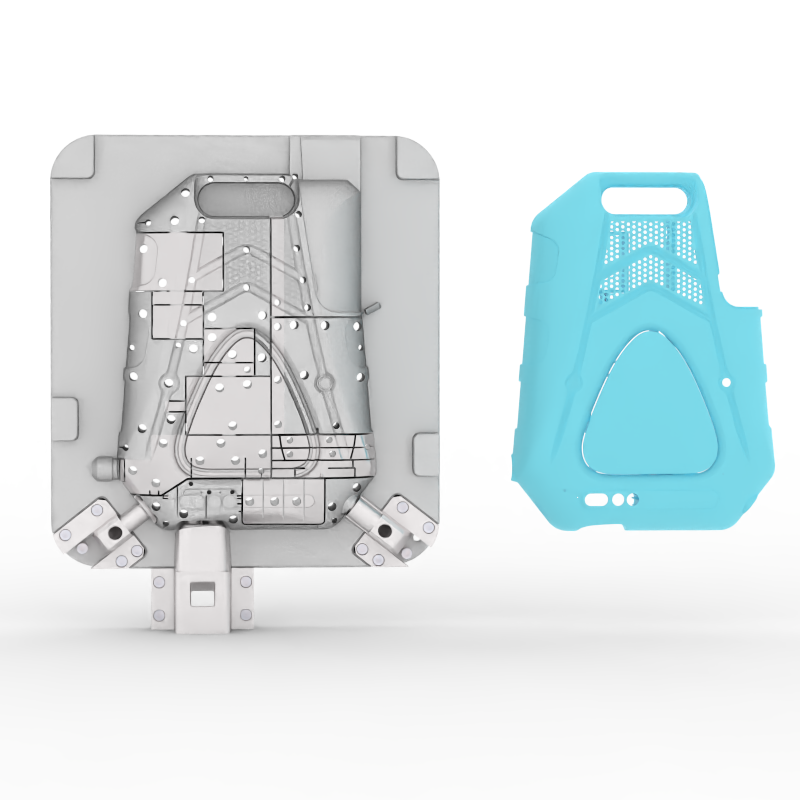
You must actively contrast standard commodity plastics against high-performance engineering resins. Standard plastics warp and fail under harsh industrial conditions. High-performance polymers offer superior structural integrity. They handle extreme temperatures effortlessly. They also resist aggressive chemicals over decades of use. Choosing the right material ensures operational success for complex engineering plastic parts.
Industrial applications demand specialized materials. Consumer-grade ABS or standard polypropylene rarely survive factory environments. You need resins formulated specifically for endurance. Consider these top industrial resins for your upcoming heavy-duty applications:
Acetal (POM / Delrin): This resin provides high stiffness and remarkably low friction. It serves as an ideal material for mechanical gears, bushings, and sliding components.
Polycarbonate (PC): This polymer delivers exceptional impact resistance. It works perfectly for transparent machine safety guards or protective sensor housings.
PEEK / Ultem (PEI): These materials offer extreme temperature stability and broad chemical resistance. Engineers frequently use them to replace heavy metals in specialized machinery.
Glass-Filled Variants: Adding glass fibers significantly increases structural strength and rigidity. However, you must carefully weigh this trade-off. Glass fill increases tool wear and often causes part brittleness.
To simplify material selection, review the comparative characteristics below. This matrix helps clarify primary strengths and ideal use cases across popular industrial polymers.
Resin Type | Key Engineering Strength | Best Industrial Application |
|---|---|---|
Acetal (POM) | Low friction, high stiffness, dimensional stability | Gears, bearings, conveyor mechanics |
Polycarbonate (PC) | Extreme impact resistance, optical clarity | Safety guards, clear rugged housings |
PEEK | Extreme heat resistance, chemical immunity | Metal replacement, aerospace, high-heat pumps |
Nylon (PA66) + Glass Fill | High tensile strength, excellent wear resistance | Heavy structural brackets, load-bearing mounts |
Always rely on official material data sheets (TDS) during specification. You should also review advanced mold-flow simulations. Avoid trusting generic marketing claims from material distributors. Evidence-oriented data prevents costly material failures. Physical testing validating chemical compatibility saves thousands in potential warranty claims.
Unrealistic tolerance demands drive up tooling costs unnecessarily. They also drastically increase scrap rates during ongoing production. You cannot apply metal machining tolerances directly to plastic components. Plastics shrink and warp during the cooling phase. You must apply Design for Manufacturability (DFM) principles early. Doing so mitigates manufacturing risks and ensures consistent part quality.
Implementing specific design rules guarantees reliable outcomes. Follow these core DFM principles diligently during the CAD phase:
Maintain Uniform Wall Thickness: Thick sections cool slower than thin sections. This temperature variance causes sink marks. Consistent thickness stops uneven shrinkage during the cooling phase.
Incorporate Proper Draft Angles: Vertical walls create immense friction during ejection. Proper draft angles ensure smooth ejection from the mold cavity. They prevent unwanted surface scoring or destructive drag marks.
Design Radiused Corners: Sharp interior corners create dangerous stress concentrations. These weak points inevitably crack under mechanical fatigue. Generously radiused corners mitigate stress and prevent fracture under heavy load.
Strategic Rib Placement: Do not simply thicken walls to add strength. Use properly proportioned reinforcing ribs instead. Ribs increase structural integrity without increasing cycle times or causing sink marks.
You must clearly distinguish between commercial tolerances and high-precision tolerances. Tight precision tolerances require extremely expensive mold machining. They also demand frequent, costly mold maintenance. Material shrinkage rates ultimately dictate the final achievable precision. You cannot force a highly shrinkable semi-crystalline resin to hold extreme micro-tolerances. Understanding these physical realities guarantees your injection molded parts meet functional expectations without wasting your procurement budget.
You must carefully evaluate the core economics of procuring custom plastic components. Tooling represents your largest initial capital expenditure. However, the final piece price dictates your long-term profitability. Balancing these two distinct financial dimensions requires a highly strategic approach. You cannot look at mold costs in a vacuum.
Mold material selection heavily influences your initial budget and long-term production capability. The plastics industry relies on standardized SPI mold classifications. Consider these two primary tooling categories carefully:
Aluminum Molds (SPI Class 104/105): These offer lower upfront costs and much faster manufacturing lead times. Aluminum cuts easily on CNC machines. They serve best for prototyping or low-volume bridge production runs under 10,000 units. They degrade quickly if used for abrasive materials.
Hardened Steel Molds (SPI Class 101/102): These demand a high initial capital expenditure. However, they remain absolutely essential for multi-cavity, continuous high-volume production. You also need hardened steel when molding highly abrasive glass-filled materials. A Class 101 mold easily guarantees one million cycles or more.
Perform a thorough cost-volume analysis before finalizing your overall tooling strategy. Calculate the absolute break-even point meticulously. Compare the heavy tooling amortization against the reduced per-part cost at higher volumes. A cheap aluminum mold saves money initially but quickly erodes profits if you produce 100,000 parts annually. Conversely, over-investing in hardened steel for a low-volume niche product wastes valuable capital. Align your mold classification strictly with your projected market demand.
Separating capable industrial manufacturers from consumer-grade molders requires strict vetting criteria. Consumer molders rarely understand the extreme demands of heavy equipment. They focus purely on cosmetic finishes and fast cycle times. You need an engineering partner, not just a high-volume parts broker. Your supplier must grasp the severe consequences of industrial component failure.
Demand verifiable proof of strict Quality Assurance protocols. Ask for their current ISO 9001 credentials immediately. If applicable to your specific sector, require advanced certifications like TS 16949 or ISO 13485. You should also expect highly transparent First Article Inspection (FAI) reporting. Thorough FAI documentation proves they can meet exact dimensional specifications reliably before scaling production.
Evaluate the significant benefits of in-house tooling versus outsourced mold management. Molders who maintain tool rooms in-house provide much faster repairs. They also offer accountable, scheduled maintenance programs. Outsourced tools often suffer from delayed maintenance. You want to avoid supplier finger-pointing when a mold breaks down mid-production. In-house toolmakers resolve complex ejection issues immediately.
Look for partners offering comprehensive secondary operations. The most capable OEM plastic molding suppliers handle advanced ultrasonic welding. They also manage complex insert molding and automated mechanical assembly under one roof. Consolidating the supply chain reduces logistical headaches. It also drastically shortens overall lead times and lowers shipping costs.
Take decisive action by requesting a thorough DFM review early in your dialogue. Ask for a comprehensive quote next. Ensure this proposal itemizes the raw tooling costs, setup fees, and exact piece prices clearly. Transparent pricing reveals the true engineering maturity of your chosen supplier.
Sourcing industrial injection molded components serves as a vital investment in your equipment reliability. You should never treat it as a simple commodity purchase. Proper procurement directly prevents catastrophic mechanical failures. It safeguards your factory uptime and protects your brand reputation.
Your strategic decision path requires strict engineering discipline. First, lock in precise environmental and mechanical specifications. Next, choose the correct high-performance engineering resin. Always validate the part design through rigorous DFM processes. Finally, align your specific tooling class directly with your exact volume requirements to maximize ROI.
Take the next logical step today. Submit your CAD files for a rigorous technical review. Obtain actionable DFM feedback immediately. Schedule a detailed tooling consultation with our experienced engineering team to guarantee your next industrial project succeeds.
A: The buyer typically owns the custom mold entirely. However, the manufacturer houses, operates, and maintains it securely in their facility. You should always verify transferability clauses in your initial contract. Clear ownership terms prevent frustrating disputes if you decide to move production to another supplier later.
A: Lead times vary significantly based on tooling complexity. Aluminum tooling and simple prototypes generally require 2 to 4 weeks. Complex, multi-cavity hardened steel production molds usually take 6 to 12 weeks. Always factor in extra time for specific material procurement and initial DFM design revisions.
A: Yes, they conditionally can. High-performance polymers like PEEK or advanced structural composites offer exceptional tensile strength. They provide significant weight reduction and excellent chemical corrosion resistance. While they match specific strength requirements of metal, engineers must carefully simulate load capacities before finalizing any transition.
A: Injection molding traditionally favors high volumes to offset high tooling costs. However, many modern manufacturers offer low-volume bridge tooling options. You can often secure MOQs as low as 100 to 500 parts. This flexibility allows cost-effective physical market testing before committing to expensive, high-cavity steel production molds.


