


Views: 0 Author: Site Editor Publish Time: 2026-07-13 Origin: Site


Medical device manufacturing operates under incredibly high stakes. A single material failure or compliance misstep can trigger immediate product recalls, severe financial penalties, and critical patient safety risks. Standard manufacturing processes simply cannot accommodate the zero-margin-for-error environment demanded by the healthcare sector. When developing life-saving fluid delivery systems or surgical instruments, engineers need materials resilient enough for harsh sterilization but precise enough for complex geometries.
Here, custom PVC injection molding emerges as a highly specialized manufacturing subset. It perfectly addresses the strict thermal and chemical realities of processing Polyvinyl Chloride (PVC) in FDA-regulated environments. Unlike generic commercial plastics, medical-grade PVC requires rigorous temperature controls and highly specialized tooling to prevent material degradation.
We will guide you from basic material research into practical manufacturing feasibility. You will learn how to assess specific process risks, understand the intricacies of biological compliance hurdles, and efficiently shortlist qualified production partners for your next medical device project.
Medical-grade PVC offers unmatched flexibility, chemical resistance, and biocompatibility, but requires highly specialized thermal management during molding.
Regulatory compliance (FDA, USP Class VI, ISO 10993) is non-negotiable and requires end-to-end material traceability.
Selecting a partner for custom medical plastic requires verifying cleanroom capabilities (ISO Class 7 or 8) and ISO 13485 certification.
Successful implementation relies on proactive Design for Manufacturability (DFM) to mitigate PVC-specific risks like corrosive outgassing and thermal degradation.
Standard commercial plastics often fail critical tests when subjected to the intense demands of the healthcare environment. They cannot survive rigorous sterilization cycles without warping or losing tensile strength. They also lack the necessary biocompatibility certifications required for sustained patient contact. Most importantly, generic polymers fail to provide the extreme flexibility needed for critical applications. Engineers rely heavily on specialized plastic medical components like IV tubing connectors, blood bags, and complex catheter components. These parts require materials that bend without kinking and seal without leaking.
You might wonder why manufacturers still choose PVC over modern alternatives like Thermoplastic Elastomers (TPE) or Thermoplastic Polyurethane (TPU). The answer lies in a proven, decades-long track record of safety and reliability. PVC remains a dominant choice because its raw material costs stay consistently low. Scaling up for high-volume production is highly efficient. When you manufacture single-use devices by the millions, predictable performance and scalable economics become paramount.
Sterilization compatibility serves as another primary driver for choosing this material. Healthcare facilities use aggressive methods to destroy pathogens before surgical use. PVC easily withstands gamma irradiation, ethylene oxide (EtO) gas, and repeated steam autoclaving. It maintains structural integrity and optical clarity throughout these harsh processes. You do not have to worry about the material becoming brittle or crazing under intense radiation.
Sterilization Compatibility Chart for Medical Plastics |
||
Sterilization Method |
PVC Performance |
Common Failure Modes in Non-Medical Plastics |
|---|---|---|
Gamma Irradiation |
Excellent; minimal yellowing if properly formulated. |
Severe embrittlement, structural cracking. |
Ethylene Oxide (EtO) |
Excellent; highly permeable for deep sterilization. |
Gas retention, prolonged aeration times. |
Autoclaving (Steam) |
Good; maintains shape under standard thermal cycles. |
Warping, melting, dimensional distortion. |
Understanding the fundamental difference between rigid and flexible variations is the first step in material selection. Rigid PVC offers exceptional structural strength. Engineers use it to design durable equipment housings, rigid diagnostic cassettes, and tough connectors. Flexible PVC relies heavily on specific plasticizers to achieve its soft, bendable nature. This flexible variant dominates the market for IV fluid paths and respiratory masks. Both formulations produce highly reliable medical plastic parts, but they require entirely different molding parameters.
The industry is currently undergoing a massive shift away from traditional plasticizers like DEHP. Regulatory bodies cite long-term health concerns regarding phthalate exposure. You must evaluate alternative, non-phthalate plasticizers such as TOTM or DINCH. Selecting these safer alternatives directly impacts operational manufacturing. Non-phthalate resins often exhibit different melt flow rates and cooling behaviors. Manufacturers must adjust injection speeds, barrel temperatures, and pack pressures accordingly. Failing to recalibrate these settings results in dimensional inaccuracies and immediate regulatory rejection.
Patient safety remains the ultimate priority. Sourcing materials certified for USP Class VI and ISO 10993 prevents harmful chemical leaching. These rigorous standards involve systemic toxicity testing, intracutaneous reactivity testing, and long-term implantation studies. When PVC molded parts come into direct contact with blood, medicine, or bodily tissues, no toxic transfer can occur. You must demand raw material certifications from your suppliers before a single pellet enters the molding machine.
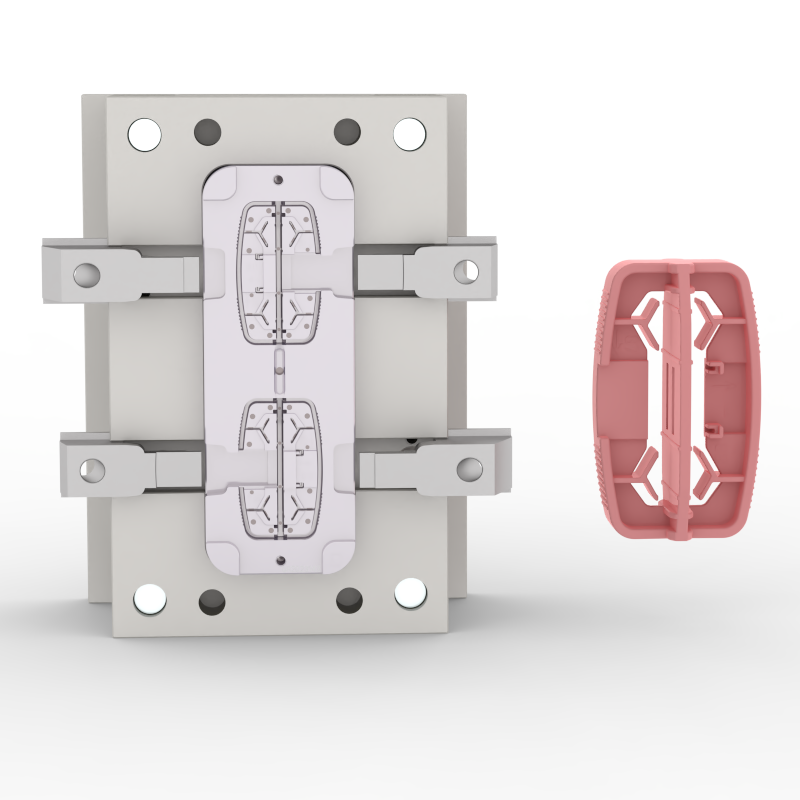
Processing PVC involves navigating extreme heat sensitivity. The material degrades rapidly if overheated or subjected to excessive shear stress inside the injection barrel. Exceptional tooling standards are absolutely critical to success. We strongly recommend using high-grade stainless steel molds, specifically 420 or 440C stainless steel. When PVC reaches melting temperatures, it naturally emits trace amounts of hydrochloric acid gas. Standard tool steels will rust and pit quickly under these corrosive conditions. High-grade stainless steel resists this outgassing, ensuring the mold cavity retains its mirror finish for millions of cycles.
You cannot mold life-saving components in a standard, open-air machine shop. The baseline requirement for clean production is an ISO Class 7 or Class 8 cleanroom environment. These controlled spaces use specialized HEPA filtration systems to drastically reduce airborne particulate counts. They regulate humidity and temperature to prevent biological contamination. Strict gowning protocols ensure human operators do not introduce hair, skin cells, or dust into the medical injection molding workspace.
Advanced process controls separate elite manufacturers from average commodity molders. Scientific molding principles use data-driven sensor feedback to ensure absolute dimensional stability. Technicians monitor cavity pressure transducers to eliminate flash on parting lines. They achieve repeatable precision across high-cavitation production runs. Every shot must mirror the previous one exactly.
Tooling Best Practice: Apply specialized anti-corrosive plating (like hard chrome or nickel-PTFE) to core pins and cavity blocks.
Thermal Best Practice: Implement highly controlled cooling channels to rapidly extract heat and stabilize shrinkage rates.
Cleanroom Best Practice: Utilize all-electric injection molding machines inside the cleanroom to eliminate hydraulic oil aerosol contamination.
Managing residence time inside the injection barrel stands as the greatest processing challenge. Residence time refers to how long the molten plastic sits in the heated cylinder before injection. If PVC sits too long, severe thermal degradation occurs. The polymer chains break down and burn. This degradation creates visible black specks or yellowing in the finished product. In the medical sector, black specks cause instant Quality Assurance (QA) failures. You must size the injection barrel correctly for the shot volume to keep the material moving continuously.
Unverified resin suppliers pose a massive vulnerability to your supply chain. You must establish strict lot-to-lot traceability from the chemical plant to the shipping dock. Demand transparent Certificates of Analysis (CoA) from your supplier for every batch. If a resin batch deviates from acceptable viscosity or moisture limits, it will ruin an entire production run. Complete transparency guarantees you can trace any finished component back to its original raw material lot.
Secondary operations introduce hidden contamination risks. Many devices require additional steps after molding. Assembly, UV adhesive bonding, ultrasonic welding, and sterile pouch packaging must happen in controlled environments. Utilizing a single-source facility minimizes excessive handling and mitigates transit-related contamination risks.
Material Verification: Always quarantine incoming resin until the CoA is verified against internal specifications.
Moisture Control: Pre-dry PVC pellets using desiccant dryers to eliminate trapped moisture, preventing splay and structural weakness.
Automated Handling: Use robotic sprue pickers and automated conveyor systems to prevent human hands from touching freshly molded components.
In-Line Inspection: Implement automated vision systems to detect microscopic black specks or dimensional warping immediately at the press.
Choosing the right manufacturing partner dictates the ultimate success or failure of your device. You must insist on absolute proof of their Quality Management Systems (QMS). Require an active ISO 13485:2016 certification. This specific standard proves the manufacturer prioritizes rigorous risk management and comprehensive documentation. Furthermore, the facility must maintain an active FDA facility registration. Do not accept generic ISO 9001 certifications as a substitute; medical manufacturing requires specialized compliance frameworks.
Early-stage engineering collaboration separates proactive partners from reactive order-takers. Evaluate the vendor's ability to provide comprehensive Design for Manufacturability (DFM) support. Engineers must optimize wall thickness to prevent sink marks. They must increase draft angles because PVC tends to stick to mold walls. They must design specific gating styles, like fan gates or edge gates, suitable for PVC's highly viscous flow characteristics. A competent partner for custom medical plastic will identify design flaws long before cutting steel.
Consider the transition path and overall scalability alignment. You will likely move from rapid prototyping and bridge tooling into high-volume automated production. Your vendor must have the press capacity and cleanroom space to handle this scale seamlessly. Moving a validated mold from one supplier to another halfway through a project triggers massive regulatory re-validation costs.
Framework for Requesting an Accurate Production Quote |
|
Required Information |
Details to Provide to the Vendor |
|---|---|
CAD Data |
Fully dimensioned 3D STEP files and 2D PDF drawings with specified tolerances. |
Material Specifications |
Exact PVC grade, required plasticizer type, and desired durometer (hardness). |
Compliance Needs |
Specify requirements for USP Class VI, ISO 10993, and RoHS/REACH compliance. |
Production Volume |
Estimated Annual Usage (EAU), initial batch size, and projected product lifespan. |
Successful execution in this field requires perfectly aligning material science, rigorous process control, and deep regulatory expertise. You cannot treat medical-grade PVC like standard commodity plastics. It demands specialized tooling, precise thermal management, and flawless cleanroom infrastructure to yield safe, reliable components.
Positioning yourself with a proactive, transparent manufacturing partnership serves as your primary driver for success. A qualified vendor drastically reduces your time-to-market. They catch design flaws early, mitigate severe compliance risks, and ensure every batch meets exacting FDA standards.
Do not leave your manufacturing feasibility to chance. Take proactive steps today to secure your supply chain. We encourage you to submit your complex CAD models to a certified engineering team. Schedule an in-depth consultation for a comprehensive DFM analysis to ensure your next device is optimized for flawless, high-volume production.
A: When heated to processing temperatures, PVC releases trace amounts of highly corrosive hydrochloric acid gas. If manufacturers use standard tool steel, the gas quickly causes rusting, pitting, and degradation of the mold cavity. To prevent this, toolmakers must use high-grade, corrosion-resistant stainless steel, such as 420 SS, or apply protective chrome plating to ensure tooling longevity and maintain strict part tolerances.
A: The end-use application determines the specific standard. Generally, ISO Class 8 cleanrooms are acceptable for secondary packaging and standard component molding. However, for critical devices that feature fluid paths, direct blood contact, or surgical implantation, manufacturers must utilize stricter ISO Class 7 cleanrooms to tightly control airborne particulates and prevent dangerous biological contamination.
A: Yes, they can be successfully overmolded. Engineers often use overmolding to add soft-touch grips, create leak-proof seals, or combine multiple functional components into a single part. However, achieving a strong chemical bond requires careful material pairing. The substrate and the overmolded resin must have compatible melt temperatures and chemical structures to prevent delamination during use.
A: Realistic lead times range from 8 to 14 weeks. This timeline accounts for complex tool design, precision machining, and rigorous validation stages. Medical tools require strict Installation Qualification (IQ), Operational Qualification (OQ), and Performance Qualification (PQ) protocols. You cannot rush these validation steps, as they legally prove the mold consistently produces safe, compliant parts.


