


Views: 0 Author: Site Editor Publish Time: 2026-10-20 Origin: Site


Can a small mold error compromise an entire plastic component? A Precision Mold helps manufacturers achieve accurate dimensions, consistent quality, and reliable assembly. This article explores key design challenges, material choices, and manufacturing strategies for complex plastic components.
Dimensional accuracy begins with the relationship between the mold cavity and the finished component. The cavity must reflect the part drawing, including critical dimensions, geometric features, and specified tolerances. Mold alignment also matters because poor alignment can create uneven parting lines, flash, or mismatched surfaces. During injection molding, the selected resin expands, flows, cools, and shrinks. Engineers must account for these behaviors when designing the mold. Otherwise, a cavity machined to the correct dimensions may still produce parts outside the required tolerance.
A precision mold helps manufacturers control these variables. Accurate machining establishes the intended geometry, while appropriate processing conditions support consistent results. This is especially important for parts containing mounting holes, sealing surfaces, narrow slots, or multiple mating features. For example, an electrical enclosure may fit poorly if its screw bosses shift or its outer dimensions vary. These issues can affect assembly speed and product reliability. Buyers should therefore identify critical-to-quality dimensions before tooling begins. The moldmaker can then focus design reviews and inspections on the features that matter most.
Repeatability means producing parts that remain consistent from one molding cycle to the next. It depends on stable tooling, suitable resin selection, and controlled machine settings. A well-built mold provides a reliable foundation, but it cannot compensate for every process variation. Changes in melt temperature, injection pressure, cooling time, or material moisture can still affect the finished component. Manufacturers must consider tooling and processing as one connected system.
For OEMs, repeatability supports dependable assembly and predictable production planning. It also helps quality teams investigate defects because stable baseline conditions make unusual changes easier to identify. Multi-cavity molds require particular attention. Each cavity should fill and cool consistently enough to produce parts that meet the same requirements. A manufacturer should evaluate cavity balance and inspect samples from different cavities when appropriate. These steps can reveal problems before full production begins.
Complex components may contain thin walls, ribs, bosses, snap-fit features, undercuts, and curved surfaces. These features create different demands on mold design. Thin sections can restrict material flow, while thick areas may cool slowly and develop sink marks. Undercuts can prevent direct ejection, requiring sliders, lifters, or other mechanisms. Each additional mechanism affects tooling complexity, maintenance, and production planning.
A precision mold must support the intended geometry without making production unnecessarily difficult. Engineers should review wall thickness, draft angles, parting lines, gate positions, and ejection methods before cutting steel. Early design feedback can identify features that are difficult to mold or expensive to maintain. Where the product allows changes, small adjustments may improve filling and simplify the mold. Buyers can review Precision Custom Plastic Injection Mold for Industrial Parts to understand the type of custom tooling relevant to industrial plastic components.
Common molding defects include flash, short shots, sink marks, warpage, and visible flow lines. These problems can result from several causes, so manufacturers should avoid treating every defect as a tooling issue. Flash may indicate poor mold closure, parting-line damage, or excessive injection pressure. Short shots may result from restricted flow, inadequate venting, or unsuitable processing settings. Sink marks and warpage often involve uneven cooling, material shrinkage, or inconsistent wall thickness.
Precision tooling helps reduce these risks through appropriate cavity geometry, gate placement, venting, and cooling design. However, the mold must also be validated under realistic processing conditions. Trial molding allows engineers to inspect parts, adjust parameters, and identify design changes before mass production. Buyers should ask how the manufacturer evaluates defects and records corrective actions. A clear validation process is more useful than relying on machining accuracy alone.
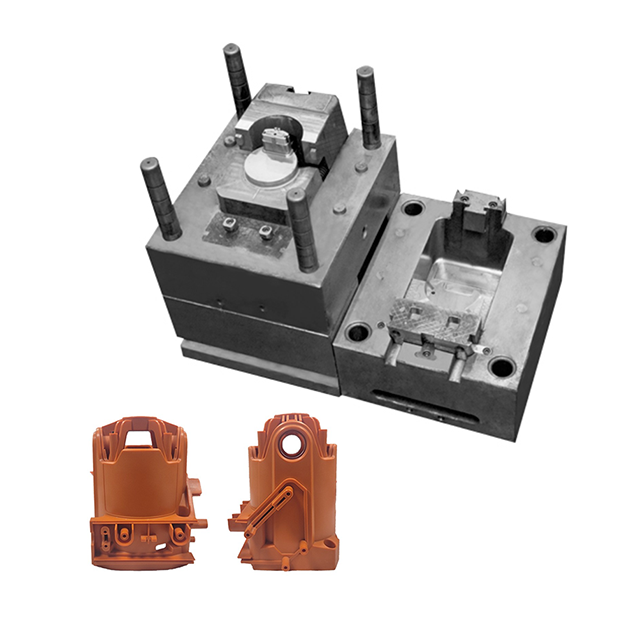
Thin walls help reduce component weight and material consumption. However, they can make injection molding more difficult. Molten plastic must flow through narrow spaces before cooling restricts its movement. If the flow path is too long, the material may not fill the cavity completely. Uneven wall thickness creates another challenge because thick sections cool more slowly than thin sections. These differences can cause sink marks, internal stress, and dimensional distortion. Engineers should review wall thickness during the product design stage. Where practical, they should avoid abrupt thickness changes and provide smooth transitions between sections. Gate location, resin flow properties, and injection conditions must also support complete filling.
Undercuts and deep cavities can complicate mold construction and part removal. A component may require sliders, lifters, or specialized ejection structures to release it safely. Deep features can also make machining, polishing, and inspection more difficult. These design choices influence tooling costs, maintenance needs, and production cycle time. Engineers should determine whether each feature serves a necessary function. If a simpler geometry can meet the product requirements, it may reduce mold complexity. When complex features are essential, the mold design should provide sufficient access for machining, cooling, and maintenance.
Tight tolerances become especially important when several plastic components fit together. Each component may meet its individual dimensional specification, yet the complete assembly can still experience fit problems. This happens because dimensional variations accumulate across mating parts. Resin shrinkage and temperature changes can also influence final dimensions. Buyers should distinguish critical functional dimensions from noncritical cosmetic dimensions. Applying unnecessarily tight tolerances across every feature can increase tooling and inspection costs without improving product performance.
Mold material affects durability, machinability, polishing performance, and maintenance requirements. The right choice depends on the resin, production volume, component geometry, and expected surface finish. Some materials create greater wear, while certain resins or additives may increase corrosion risks. Optical components can require especially careful material selection and cavity finishing. For other industrial parts, durability and ease of maintenance may receive greater attention. Buyers should discuss expected output and resin characteristics before selecting mold materials. This helps the manufacturer balance tooling life against the initial investment.
The gate controls where molten plastic enters the cavity. Its location influences filling balance, weld-line position, surface appearance, and packing behavior. Runner design also affects how material reaches each cavity. Poor flow balance may produce inconsistent filling or dimensional variation. Engineers should evaluate the part geometry, resin flow characteristics, and appearance requirements together. For components requiring uniform surfaces, gate placement may need to avoid visible areas. For structural parts, it may need to support strength around critical features.
Cooling design influences both dimensional stability and cycle time. If one area cools much faster than another, uneven shrinkage may cause warpage or residual stress. Efficient cooling channels help remove heat more consistently across the mold. Their placement must also account for cavity geometry and areas that retain heat. Conformal cooling may be suitable for certain complex designs, although its cost and manufacturing requirements need evaluation. Buyers should ask how the manufacturer plans to manage cooling in thick sections and other high-risk areas.
Air trapped inside the cavity can restrict filling or create burn marks. Proper venting helps displaced air escape as molten plastic enters the mold. Ejection design also matters because complex components can deform or become damaged during removal. Draft angles, ejector-pin positions, and surface finish should therefore be reviewed together. Optical lenses and transparent components demand particular attention to cavity polishing and surface defects. The mold must match the final product's optical, functional, and cosmetic requirements.
Different plastics behave differently during injection molding. ABS often suits housings and consumer products requiring a balance of toughness and appearance. Polycarbonate (PC) can provide impact resistance and transparency, depending on its grade and application. Polyamide (PA) offers useful mechanical properties but may absorb moisture. Polyoxymethylene (POM) often suits components requiring dimensional stability and low friction. These are general tendencies, not universal guarantees. Specific grades can behave differently.
Material selection should reflect operating temperature, mechanical loads, chemical exposure, appearance, and assembly requirements. Buyers should also consider shrinkage data and moisture sensitivity. A precision mold designed for one resin may not deliver equivalent results after a material change. The manufacturer needs the intended resin grade early enough to assess cavity dimensions, gate design, and processing conditions.
Plastic shrinkage occurs as material cools and solidifies. Its magnitude depends on resin characteristics, part geometry, mold temperature, and processing conditions. Some materials shrink differently along and across the direction of flow. This difference can affect flatness and dimensional accuracy. Engineers compensate through mold design, but compensation should rely on material data and trial results rather than assumptions alone.
Warpage may also develop when cooling or residual stress varies across a component. Ribs, bosses, and thick sections can create local differences. A balanced design, suitable cooling, and stable processing help reduce these risks. Simulation can identify potential trouble areas, but physical trials remain important. The actual result depends on the selected material, mold construction, and molding process.
A transparent optical component requires different surface control from a hidden structural bracket. Optical parts may need precise contours, low surface defects, and consistent optical performance. Electrical enclosures may prioritize dimensional fit, insulation requirements, and mounting accuracy. Automotive components may require durability and resistance to environmental exposure. The mold design should reflect these differences from the beginning.
Manufacturers should provide clear acceptance criteria for critical dimensions, surface finish, color, and visible defects. When requirements are vague, buyers and moldmakers may interpret quality differently. Early agreement helps guide tooling decisions and reduces disputes during sample approval. For custom projects, Quanhao's plastic injection mold solutions provide a starting point for discussing tooling requirements and product applications.
Production efficiency depends on preventing problems before they become recurring costs. Accurate tooling, design reviews, and suitable material selection can reduce avoidable defects. They can also limit the need for repeated mold modifications after sampling. Manufacturers should identify high-risk features before machining begins. These may include thin walls, tight mating dimensions, deep cavities, and complex ejection areas. Design-for-manufacturing reviews help the team assess these features early. Mold trials then reveal whether the proposed design performs as expected. Although validation requires time, it can prevent more expensive corrections during mass production.
A shorter molding cycle can improve output, but speed alone does not determine efficiency. Excessive cooling reductions may cause deformation or unstable dimensions. High injection speeds can also create defects under unsuitable conditions. Manufacturers should optimize filling, packing, cooling, and ejection as a complete process. The objective is to achieve acceptable quality at a repeatable cycle time. Buyers should evaluate both production targets and quality requirements when reviewing a tooling proposal.
Trial molding provides evidence of how the mold performs under actual conditions. Engineers can inspect sample dimensions, appearance, filling behavior, and ejection performance. First-article inspection then compares critical features against approved drawings. For demanding components, coordinate measuring machines or other suitable measurement systems may help verify complex geometries. The inspection method should match the required tolerance and feature type. Any corrective action should be documented and checked again after modification.
Buyers should assess whether a manufacturer understands their component's geometry, material, and functional requirements. Experience with similar parts can help identify potential risks before tooling begins. Ask how the engineering team reviews drawings, recommends design changes, and handles difficult features. A supplier should explain its approach clearly rather than promise accuracy without supporting details.
CNC milling, machining centers, wire cutting, and grinding can support different moldmaking operations. However, an equipment list alone does not prove finished mold quality. Actual capability also depends on machine condition, operator experience, process control, and inspection methods. Buyers should ask how critical dimensions are measured and verified. They should also clarify which operations occur in-house and which require external suppliers.
A reliable workflow should connect drawing review, machining, inspection, sampling, and corrective action. Buyers should ask for a clear plan covering sample approval and dimensional verification. They should also establish how design changes will be recorded. These steps improve accountability and make it easier to resolve production issues.
Clear communication reduces uncertainty throughout tooling development. Buyers should confirm the project schedule, approval milestones, and responsibilities for design changes. They should also discuss maintenance requirements and replacement components. Quoted lead times should reflect mold complexity, material availability, and validation needs. For customized projects, contact Quanhao Plastic Mold to discuss drawings, technical requirements, and tooling feasibility.
Automotive applications include housings, clips, connectors, and interior components. These parts may require accurate mounting features and consistent assembly dimensions. Suitable tooling helps manufacturers maintain repeatable quality across production batches. Material selection must also reflect the component's operating environment.
Electrical products use plastic enclosures, connector bodies, insulation components, and internal supports. Dimensional errors may affect assembly, component positioning, or enclosure fit. Precision mold design helps control these features. Material properties and applicable safety requirements must also guide product development.
LED products may use plastic lenses, covers, and structural housings. Optical components often require careful control of geometry and surface quality. Even small defects may affect light distribution or appearance. Tooling requirements should therefore reflect the intended optical function and selected resin.
Consumer products rely on consistent fit, appearance, and durability. Examples include appliance housings, product covers, handles, and snap-fit assemblies. Precision tooling supports repeatable production and reduces visible variation. Appropriate mold design also helps balance product quality against manufacturing cost.
Precision mold manufacturing improves accuracy, consistency, and production efficiency for complex plastic components. Dongguan Quanhao Plastic Mold Co., Ltd. provides custom injection molds and plastic parts, helping manufacturers address complex designs, reduce defects, and achieve reliable production quality.
A: It produces accurate molds for complex plastic components requiring tight tolerances and consistent quality.
A: A precision mold improves dimensional accuracy, assembly fit, and production repeatability.
A: Proper gating, cooling, and venting help reduce warpage, flash, and short shots.
A: Mold complexity, material selection, tolerances, and tooling life affect total costs.
A: Evaluate engineering experience, CNC machining capabilities, quality control, and mold trial procedures. component, share your drawings and technical requirements with the team. Discussing the project early can help identify tooling challenges, clarify manufacturing options, and establish a practical path toward reliable production.


