


Views: 0 Author: Site Editor Publish Time: 2026-08-08 Origin: Site


Transit-stage electronics face immense environmental risks. Moisture ingress and mechanical shock ruin sensitive shipments daily. These twin threats cause a massive percentage of DOA (Dead on Arrival) components across global supply chains. Procurement teams and packaging engineers must find reliable solutions to protect these assets.
A waterproof PE divider acts as much more than a simple physical barrier. It serves as a vital compliance tool and a strict yield-protection mechanism. Traditional packaging materials often fall short in harsh transit conditions. Corrugated cardboard and open-cell foams invite humidity and fail under kinetic stress. You must rethink your transit strategy to prevent devastating profit losses.
This article breaks down exactly when to specify PE (Polyethylene) dividers for your logistics network. We will explore how to assess their unique structural benefits. Finally, you will learn the precise technical criteria required for shortlisting trusted packaging manufacturers.
Waterproof PE dividers provide a dual-defense mechanism: closed-cell moisture resistance combined with high-impact kinetic absorption.
They are essential for ocean freighting bare PCBs, automotive sensors, and high-value industrial electronics where cardboard or open-cell foams fail.
Procurement evaluation must balance the tooling costs of molded PE parts against the scalable flexibility of CNC-routed custom packaging parts.
A waterproof barrier alone is insufficient; engineers must account for internal condensation risks and ESD (Electrostatic Discharge) compatibility.
Logistics failures cost electronics manufacturers millions every year. Inadequate packaging ranks high among the primary culprits. You might ship a batch of premium components perfectly intact from the factory. However, they can arrive completely useless after a few weeks at sea. The financial blow extends far beyond the immediate loss of hardware.
Moisture damage triggers severe cascading costs. Companies face expensive reverse logistics, delayed production schedules, and unhappy end-users. We must examine the specific failure modes that drain corporate budgets.
PCB Delamination: Moisture permeates bare printed circuit boards during transit. When these boards later undergo high-heat reflow soldering, trapped water vaporizes instantly. The resulting pressure forces board layers apart. This "popcorning" effect destroys the PCB completely.
Micro-Corrosion of Solder Joints: Invisible oxidation forms on exposed metal surfaces when ambient humidity remains too high. This micro-corrosion leads to weak solder joints, unpredictable electrical shorts, and latent field failures.
Voided Warranties: Many high-value electronic assemblies feature moisture-sensitive warranty stickers. If your packaging allows excessive humidity, these sensors trip before the customer even opens the box. This automatically voids the manufacturer's warranty and severely damages brand trust.
Traditional packaging materials routinely fail under demanding supply chain conditions. Standard corrugated dividers offer zero moisture resistance. In fact, cardboard acts like a sponge. It actively absorbs humidity from maritime air. Open-cell polyurethane inserts are equally dangerous. Their porous structures allow water vapor to flow freely. They become conduits for moisture rather than protective barriers.
Successful transit packaging requires strict engineering standards. You must define clear success criteria. A high-performance packaging system should maintain a sub-10% relative humidity internally. It must also survive rigorous ISTA drop tests without structural deformation. Meeting these benchmarks demands advanced materials.
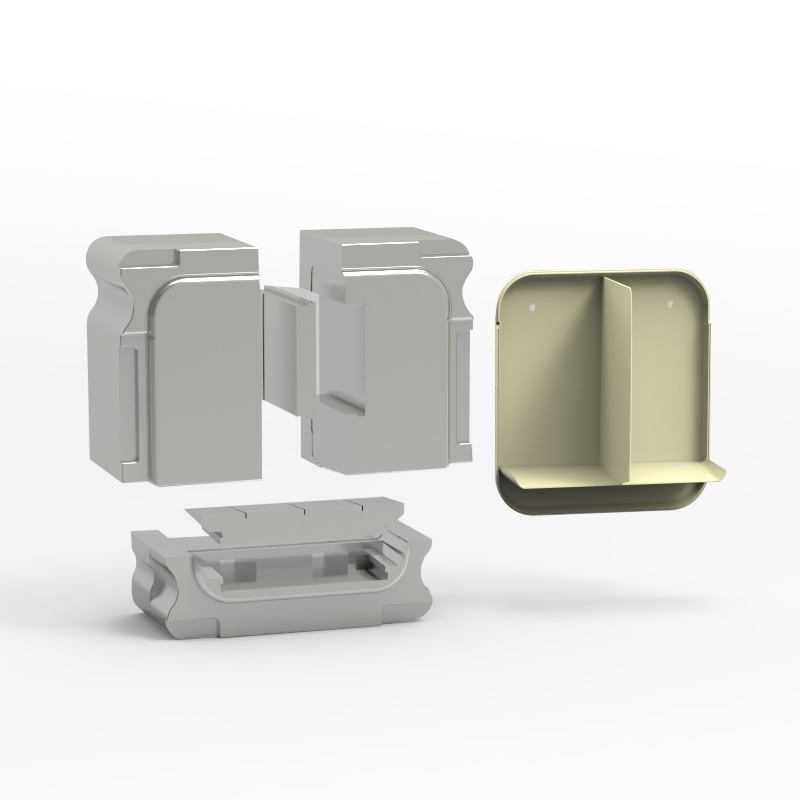
Polyethylene (PE) dominates the protective packaging sector for good reasons. It relies on advanced material science to shield sensitive goods. Engineers specifically prefer cross-linked polyethylene for critical electronic components. To understand its effectiveness, we must look at its cellular architecture.
The secret lies in the closed-cell cross-linked structure of a PE plastic divider. Unlike standard foams, closed-cell PE consists of millions of tiny, sealed gas pockets. These individual bubbles do not connect with one another. Water molecules cannot physically pass through this solid matrix. The material is inherently hydrophobic. It repels water rather than absorbing it.
We can break down its core functional advantages into three main categories:
Absolute Moisture Resistance: Closed-cell PE boasts an incredibly low water absorption rate. Even when fully submerged, it takes on virtually zero water weight. This blocks external humidity spikes from reaching your components.
Kinetic Attenuation: While moisture control is vital, kinetic energy destroys components too. PE offers high density and rigidity. It absorbs transit vibrations effectively. It also prevents heavy, sharp components from shifting inside the box. This stops parts from piercing the vital outer vacuum bags.
Chemical Inertness: Polyethylene is chemically stable. It does not off-gas volatile organic compounds (VOCs). It contains no corrosive chlorides or sulfur. This chemical purity is absolutely critical for sensitive optical lenses and bare-die components.
By leveraging these three traits, PE acts as a comprehensive shield. It isolates electronics from the unpredictable chaos of global shipping routes.
Different electronics require different protective strategies. Engineers deploy PE dividers across a variety of demanding sectors. Each industry faces unique logistical threats. The adaptability of PE makes it an ideal defense mechanism across the board.
We frequently see PE utilized for shipping bare Printed Circuit Boards (PCBs). High-density boards are fragile and abrasive. When packed together closely, friction can scrape delicate traces. A custom waterproof packaging insert solves this. It prevents physical abrasion between boards. Simultaneously, it blocks out external moisture spikes during unpredictable transit delays.
The automotive and EV (Electric Vehicle) sectors also rely heavily on this material. Modern vehicles contain massive battery management systems and high-voltage modules. These components are extremely heavy. They require strict dielectric separation. Condensation inside an EV module package can cause catastrophic short circuits. PE handles the heavy physical load while keeping the micro-climate completely dry.
Maritime and defense electronics face the harshest conditions imaginable. Mission-critical assemblies travel through aggressive salt fog. They endure extreme temperature swings. Ocean freight timelines stretch for weeks or months. Military-grade PE partitions ensure these vital components survive intact.
Industry Use Case | Primary Transit Threat | PE Divider Solution |
|---|---|---|
Bare PCBs | Friction abrasion, ambient humidity, popcorning | Rigid separation, zero water absorption, cleanroom compatible |
Automotive / EV | Heavy kinetic shock, condensation, short circuits | High load-bearing capacity, dielectric properties, thermal insulation |
Maritime / Defense | Salt fog, prolonged moisture exposure, extreme drops | Chemical inertness, MIL-SPEC drop survival, impermeable barrier |
Specifying the right packaging requires a rigorous evaluation framework. Buyers must look beyond basic dimensions. You must carefully weigh design flexibility against manufacturing scalability. Furthermore, electrical properties play a major role in your final choice.
First, evaluate the return on investment (ROI) threshold for custom packaging parts. Standard, off-the-shelf slotted dividers work fine for uniform, rectangular form factors. However, modern electronics often feature irregular shapes. Protruding heat sinks and delicate connectors require exact fits. Custom CNC routing ensures a zero-tolerance fit. This stops components from rattling during transit.
Next, you must consider manufacturing scalability. Your production volume dictates your manufacturing method. Low-volume prototyping favors CNC-machined dividers. You avoid expensive tooling fees. Conversely, mass production demands injection molded PE parts. Injection molding requires a high upfront tooling investment. However, it delivers the absolute lowest per-unit cost at scale.
Chart: CNC Machining vs. Injection Molding for PE Dividers | ||
Evaluation Metric | CNC-Machined Dividers | Injection Molded Parts |
|---|---|---|
Upfront Tooling Cost | Very Low | High |
Per-Unit Cost (at scale) | Moderate to High | Extremely Low |
Design Flexibility | High (easy to iterate) | Low (tools are fixed) |
Ideal Application | Prototyping, specialized low-volume runs | Mass production, standardized high-volume runs |
Finally, we must address a critical technical note: ESD (Electrostatic Discharge) integration. Waterproof PE must feature anti-static properties for electronics use. Manufacturers achieve this in two ways. They use topical coatings or carbon-loaded conductive PE. Topical "pink" coatings degrade over time. Moisture accelerates this degradation. For long-term storage, you must specify permanent, carbon-loaded black PE. This embeds the ESD properties directly into the polymer chain.
Even the best materials fail if deployed incorrectly. Engineers often fall victim to implementation blind spots. Understanding these risks prevents devastating logistical errors.
The most common engineering misconception involves the condensation trap. A waterproof divider blocks moisture from entering a package. However, it also traps any moisture already inside. When evaluating a waterproof PE divider and electronics packaging strategy, you must consider ambient air. If you seal a package in a humid factory, that moisture travels with the product. When air freight temperatures drop, this trapped vapor condenses into liquid water.
You must pair waterproof dividers with proper micro-climate control. Always seal your electronic components inside a Moisture Barrier Bag (MBB). Place calculated amounts of desiccants inside the bag. Include a Humidity Indicator Card (HIC) for visual verification. The PE divider sits outside the MBB, providing structural support without interfering with the internal micro-climate.
Dimensional tolerances present another significant risk. Extreme temperature fluctuations occur frequently during global transit. Cargo holds can reach 60°C in the summer and plunge below freezing at altitude. Polyethylene experiences slight thermal expansion and contraction under these extremes. Your design tolerances must account for this movement. If you engineer the fit too tightly, thermal contraction could crush delicate components.
Environmental and compliance considerations also require your attention. Corporate sustainability goals increasingly drive procurement decisions. Regional packaging waste directives, like the EU packaging regulations, strictly monitor material disposal. Unlike mixed-material foams that end up in landfills, pure PE is highly recyclable. Selecting single-material PE dividers simplifies end-of-life recycling for your customers. This aids in corporate compliance and boosts your brand reputation.
Specifying high-quality dividers is a highly targeted engineering decision. It requires balancing strict moisture protection, reliable structural integrity, and robust ESD compliance. You cannot afford to treat transit packaging as an afterthought. It is a critical extension of your product's quality control process.
Buyers should refine their shortlisting logic immediately. Start by requesting detailed Material Data Sheets (MDS) from potential suppliers. Ensure these sheets confirm closed-cell density and chemical purity. Next, ask for accelerated longevity test results for their ESD materials. Track how their packaging choices influence your historical RMA (Return Merchandise Authorization) rates over time.
Do not wait for transit damage to erode your margins. Consult with a dedicated packaging engineer today. Audit your current transit failure rates. Request a custom PE prototype to test against your unique supply chain hazards. Proactive engineering always outperforms reactive troubleshooting.
A: No. PE dividers provide vital structural separation and prevent localized moisture pooling. However, they are only part of a larger protective system. A sealed MBB loaded with desiccants is still strictly required to control the internal micro-climate around the electronics.
A: EPE (Expanded Polyethylene) is lightweight, highly cushioned, and cost-effective for general use. Standard high-density cross-linked PE offers much stricter design tolerances, superior multi-trip durability, and significantly better moisture-blocking properties for sensitive cargo.
A: It entirely depends on the manufacturing method. "Pink" topically treated PE typically loses its ESD properties over 6 to 12 months, especially in high humidity. Black carbon-loaded PE maintains permanent, reliable ESD protection regardless of time or moisture exposure.


