


Views: 0 Author: Site Editor Publish Time: 2026-08-16 Origin: Site


Selecting the wrong elastomer carries high commercial and engineering stakes. Hardware teams face serious risks if they misjudge material limits. Bad choices often lead to premature part failure, unexpected chemical degradation, or bloated tooling costs. You must understand the exact physical demands of your application. TPU (Thermoplastic Polyurethane) technically belongs to the broader TPE (Thermoplastic Elastomer) family. However, industrial environments treat them as entirely distinct categories. They offer vastly different performance profiles in the field.
This guide provides a technical decision-making framework. You will learn to evaluate critical material trade-offs effectively. We help hardware engineers and procurement teams assess processing requirements. You will also understand how to judge vendor capabilities for long-term manufacturing success. The difference between a functional prototype and a scalable production run lies in material science. We will explore how exact polymer selection dictates your final product durability.
Performance vs. Cost: TPE generally offers lower material costs and faster cycle times for high-volume consumer parts, while TPU provides superior abrasion resistance and load-bearing capacity for demanding industrial environments.
Process Compatibility: TPE injection molding is highly scalable but requires specific draft angles and shrinkage calculations; custom urethane molding (often cast or injected) offers better structural integrity for thick-walled components.
Vendor Evaluation: Sourcing reliable TPU TPE polyurethane molded parts requires vetting partners on their tooling precision, moisture-control during processing, and overmolding capabilities.
Engineers often group flexible polymers together loosely. You must separate them by their underlying chemistry to ensure reliable product performance. We define these solution categories without the typical marketing fluff. This helps you grasp their fundamental physical differences quickly.
TPE represents a broad category of advanced materials. It successfully combines the processing ease of standard plastics and the deep flexibility of rubber. You will often see them labeled generically as thermoplastic rubbers in some manufacturing sectors.
These materials bring distinct strengths to modern hardware design. They provide excellent flex fatigue resistance during repeated movements. You can easily source them in much softer Shore A options. They also boast superior weatherability and lighter overall part weight. However, they carry specific engineering limitations. They exhibit much lower thermal resistance than engineered industrial rubbers. They also remain highly susceptible to mechanical creep under sustained heavy loads.
Conversely, TPU acts as a rugged, block-copolymer subclass. When you specify TPU molded parts, you gain immediate access to high-performance attributes. It serves applications requiring extreme toughness.
TPU delivers exceptional abrasion and scratch resistance naturally. It provides notably high shear strength under pressure. The material also maintains strong resistance to harsh industrial oils and greases. We must also acknowledge the drawbacks of TPU. These polymers are highly hygroscopic in raw pellet form. They require strict drying protocols before processing begins. They typically range much harder, falling between Shore 60A and 80D. They also demand a higher per-pound material cost compared to basic elastomers.
Material Category | Key Strengths | Notable Limitations | Common Hardness Range |
|---|---|---|---|
TPE | High flex fatigue, lighter weight, excellent weatherability, softer tactile feel. | Susceptible to creep, lower thermal resistance. | Shore 0A to 90A |
TPU | Superior abrasion resistance, high shear strength, strong chemical/oil resistance. | Hygroscopic, higher material cost, harder baseline feel. | Shore 60A to 85D |
You cannot select an elastomer based on supplier data sheets alone. We must match specific material features to your desired engineering outcomes. This rigorous evaluation prevents catastrophic failures in the field. Let us explore the primary dimensions for evaluating polyurethane parts against standard elastomers.
You must evaluate dynamic versus static loads during the initial design phase. TPU excels in high-friction scenarios. It handles severe load-bearing applications effortlessly. Common examples include heavy-duty gears, factory caster wheels, and power transmission belts. The polymer chains resist tearing even under immense mechanical stress.
TPE usually performs much better for repeated bending. It handles ergonomic compression effectively over thousands of cycles. You will find it commonly deployed in weather seals, handlebar grips, and flexible bellows. It compresses easily and returns to its original shape.
Industrial settings expose molded components to harsh chemicals continuously. TPU offers superior resistance to cutting oils, hydrocarbons, and severe mechanical wear. You should choose it for factory floor equipment and heavy machinery environments.
Specific TPE blends perform much better outdoors over long periods. They withstand intense UV exposure and extreme cold weather gracefully. They also survive continuous water submersion without degrading. This makes them ideal for marine environments and outdoor consumer sporting goods.
Consumer products heavily rely on pleasing tactile feedback. TPE easily achieves a highly desirable "soft-touch" matte finish directly from the mold. It feels warm, premium, and grippy in the human hand. It requires very little secondary processing to look great.
TPU tends to present a more rubbery, glossy finish natively. You can alter this visual appearance through tooling. You must texture the mold surface heavily to reduce the natural TPU gloss. This adds slight complexity to the initial tool design.
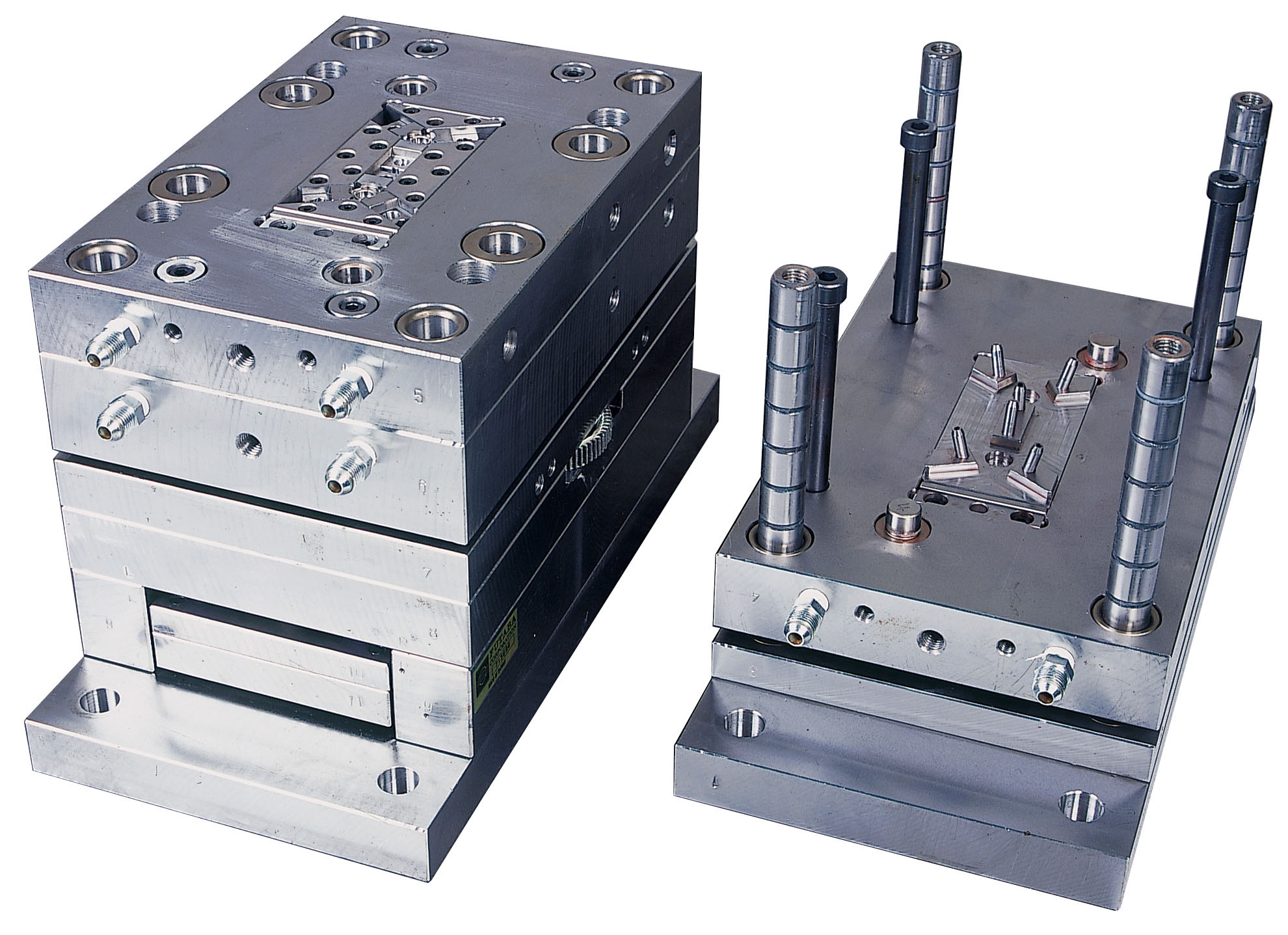
Theoretical material properties mean nothing if you cannot manufacture the part reliably. You face distinct implementation risks depending on your chosen production process. Tooling constraints dictate your overall project scalability. Let us examine the processing realities carefully.
Executing successful TPE injection molding requires rigorous design discipline. You must maintain strict wall thickness uniformity throughout the component. You also need highly precise gate placement. This prevents unsightly flow marks and localized sheer stress during the injection phase. Proper venting remains critical to avoid trapped gas burns.
Conversely, custom urethane molding provides greater geometric freedom. This process accommodates significantly thicker cross-sections easily. Cast polyurethane eliminates the severe sink marks typically seen in standard injection molding. It offers a robust solution for large, bulky, energy-absorbing bumpers.
Maintain uniform wall thicknesses to prevent uneven cooling and subsequent part warpage.
Apply generous draft angles to ensure the sticky elastomer ejects smoothly from the steel core.
Avoid sharp internal corners to reduce stress concentrations and potential tearing upon ejection.
Size your gates appropriately to prevent excessive shear heating as the molten material enters the cavity.
We must address a difficult engineering reality openly. TPEs exhibit higher shrinkage rates than rigid engineering plastics. They also show more variable shrinkage across different part geometries. This demands highly precise tooling adjustments from the start. You should expect iterative tool tuning to hit tight dimensional tolerances consistently.
Engineers frequently specify soft elastomers over rigid substrates. Both material categories support overmolding well. However, chemical compatibility strictly depends on the rigid base plastic. TPU bonds excellently to rigid substrates like ABS and Polycarbonate (PC). TPEs require vastly different chemical formulations. You will often see them formulated specifically to bond seamlessly with Polypropylene (PP).
Selecting the right polymer speeds up product development significantly. We created this shortlisting logic based on proven industry use cases. It helps you navigate complex specification requirements quickly. You can map your project needs directly to these flexible plastic parts guidelines.
You are developing fast-moving consumer electronics, automotive interior trim, or specialized medical device grips.
Your target business model relies heavily on high-volume production, low part weight, and ultimate cost-efficiency.
Your regulatory requirements mandate strict FDA compliance or specific skin-contact safety rules. You can source these certifications easily in standard medical-grade TPEs.
The product demands a soft-touch, matte aesthetic straight out of the molding machine without secondary finishing.
You are engineering heavy-duty industrial seals, drive belts, protective equipment housings, or rugged mining components.
The molded part faces constant dynamic friction, highly abrasive environments, or frequent high-impact strikes during regular operation.
Long-term structural integrity absolutely overrides the initial raw material cost of the component.
The application involves frequent exposure to industrial lubricants, motor oils, or harsh grease.
Application Scenario | Material Recommendation | Primary Justification |
|---|---|---|
Wearable Device Straps | TPE | Skin-safe, flexible, soft-touch finish. |
Forklift Caster Wheels | TPU | Extreme load bearing, abrasion resistance. |
Automotive Weather Seals | TPE | UV resistance, superior weatherability. |
Hydraulic Fluid Seals | TPU | High oil resistance, shear strength. |
Bottom-of-funnel vendor selection prevents massive downstream manufacturing disasters. You must mitigate your supply chain risk proactively. Sourcing reliable TPU TPE polyurethane molded parts requires vetting partners rigorously. You need a partner who understands the nuanced chemistry of flexible polymers.
TPU remains highly hygroscopic by nature. It absorbs ambient facility moisture rapidly. You must evaluate if the vendor utilizes documented pre-drying processes. They need high-quality desiccant dryers directly on their factory floor. Failure here leads directly to brittle, weak components. You will also see visually defective parts plagued by extensive surface splay and silver streaking.
Look closely at your partner's engineering track record. They must demonstrate a proven ability to calculate accurate shrink rates for soft elastomers. This specific knowledge prevents costly tool re-cuts later. You need manufacturing partners who understand exactly how flexible resins behave inside a hot steel mold. Ask them about their specific venting and gate design strategies for elastomeric materials.
Determine if the vendor offers dedicated low-volume production runs. Many advanced partners provide 3D printed TPU prototypes or cast urethane equivalents. This lets you validate the physical design in the real world quickly. You can test geometric form and mechanical function thoroughly. Do this before you commit significant capital to expensive, hardened steel injection molds.
Choosing between TPE and TPU is never about finding a universally superior material. It requires identifying the mathematically and environmentally correct polymer for your exact needs. You must align your material choice deeply with the specific application load and your target production volume. TPE dominates high-volume consumer goods through impressive processing speed and ergonomic feel. TPU anchors heavy industrial applications through sheer, unyielding durability.
We highly encourage hardware engineers and procurement buyers to move beyond theoretical desktop evaluations. You need tangible, physical data to finalize your engineering decisions confidently. Prompt your team to request a comprehensive material datasheet review from your selected supplier. Order physical sample plaques to test the tactile feel and visual finish personally. You should also submit your latest CAD file for a professional manufacturability (DFM) assessment before cutting any tooling.
A: Generally no, due to vastly differing shrink rates and flow characteristics. Attempting a direct material swap usually results in parts that fall well outside of acceptable dimensional tolerances. Tooling is almost always cut to match the specific, calculated shrinkage profile of the originally specified elastomer.
A: TPE is cheaper per pound and generally processes much faster. However, TPU offers superior longevity in high-wear applications. Its incredible durability often reduces replacement frequency, yielding much better long-term value for demanding industrial components despite the higher initial purchase price.
A: Yes, both are true thermoplastics. They can theoretically be melted down and repurposed easily. This distinguishes them heavily from traditional thermoset rubbers. Their thermoplastic nature makes them highly favorable for corporate sustainability compliance and modern circular manufacturing initiatives.
A: TPEs span a massive hardness range from ultra-soft gel-like states (Shore 0A) to semi-rigid forms (Shore 90A). TPUs typically start much harder. They generally begin around Shore 60A and can go all the way up to rigid, impact-resistant plastics measuring Shore 85D.


