


Views: 0 Author: Site Editor Publish Time: 2026-09-11 Origin: Site


In the automotive supply chain, defect tolerance is functionally zero. A single compromised component can easily lead to assembly line halts, systemic recalls, or severe safety failures. Effective quality control in automotive manufacturing is never merely an end-of-line sorting exercise. Instead, it serves as a highly integrated system spanning upfront tooling design, in-process monitoring, and rigorous compliance documentation. When you fail to catch a flaw early, the financial and reputational damage multiplies exponentially. You simply cannot afford blind spots in your manufacturing processes.
This guide breaks down exactly how top-tier manufacturers structure their proactive quality frameworks. We will explore the precise compliance standards you must rigorously verify. Finally, you will learn practical strategies to evaluate a manufacturing partner's true capabilities before you sign any long-term production contract.
Upfront engineering dictates final quality: Design for Manufacturability (DFM) and mold tooling validation are the primary safeguards against systemic defects.
Real-time monitoring is non-negotiable: Scientific molding principles and cavity pressure sensors detect anomalies before a batch is ruined.
Compliance is baseline, not a differentiator: True automotive-grade partners must natively integrate IATF 16949 standards and full PPAP (Production Part Approval Process) capabilities.
Traceability mitigates risk: End-to-end data tracking ensures that if a failure occurs, the root cause is isolated to a specific lot, material batch, or machine cycle.
In modern vehicle manufacturing, you face immense pressure to deliver flawless components. Contrast the minimal cost of in-line defect detection against the exponential cost of OEM assembly line downtime. When a defective batch reaches an OEM assembly line, the resulting shutdown costs thousands of dollars per minute. Post-market recalls amplify this damage even further. Investing in rigorous quality checks early in the lifecycle is always cheaper than repairing reputational damage later.
You must also consider the material integrity realities surrounding automotive plastic parts. Today, manufacturers expect polymers to perform under extreme temperature variations, harsh chemical exposure, and intense UV radiation. Structural components must endure continuous mechanical loads without creeping or fracturing. If the injection molding process slightly degrades the polymer chains, the final part will fail prematurely in the field.
Understanding the distinction between Quality Assurance (QA) and Quality Control (QC) is crucial here. QA focuses on defect prevention. It involves Advanced Product Quality Planning (APQP) and careful process design. In contrast, QC detects and isolates anomalies during active production. You need both to succeed. QA sets the theoretical boundaries, while QC enforces them on the factory floor, ensuring your custom auto parts remain consistent across millions of cycles.
Quality begins long before plastic enters a mold. During the pre-production phase, engineers analyze designs to prevent flaws from becoming permanent features of the tooling.
Mold Flow Analysis: Engineers use advanced simulation software to visualize how molten plastic fills the mold cavity. This predictive step identifies potential sink marks, high-stress weld lines, and dangerous air traps before anyone cuts steel. Adjusting gate locations digitally saves weeks of costly physical rework.
Tooling Precision: The dimensional accuracy of the mold itself dictates the absolute ceiling of your injection molding quality. If the mold core is off by a few microns, every single part will inherit that error. High-end CNC machining and EDM (Electrical Discharge Machining) ensure the tool meets exact specifications.
Material Verification: Resins require rigorous testing before melting. Moisture analysis is particularly critical. If hygroscopic materials like polyamides (Nylon) retain too much moisture, the water turns to steam during processing. This causes hydrolysis, which chemically degrades the polymer and ruins the part's structural strength.
Once mass production begins, you cannot rely entirely on human inspectors to catch every flaw. The process itself must be smart, repeatable, and highly monitored.
Process Control: Top manufacturers utilize decoupled molding techniques. They separate the fill, pack, and hold phases of the injection cycle. By filling the mold based on injection speed rather than pressure, they achieve maximum consistency. This scientific approach isolates variables, making it easier to troubleshoot anomalies.
Sensor Integration: Modern molds feature embedded in-cavity pressure and temperature sensors. These sensors graph the exact conditions inside the mold during every single shot. If the cavity pressure drops unexpectedly, the system knows a short shot occurred. The machine then communicates with automated robotics to immediately segregate the suspect part into a reject bin.
After parts exit the press, physical inspection verifies they meet the approved dimensional and cosmetic standards.
Manufacturers rely on Coordinate Measuring Machines (CMM) and advanced 3D scanning to verify complex GD&T (Geometric Dimensioning and Tolerancing) requirements. They conduct these deep measurements on first-run items and random-sample parts throughout the shift. This proves the process remains centered within the accepted tolerance band.
Additionally, automated vision systems provide high-speed molded component inspection. High-resolution cameras scan every part as it moves down the conveyor. They check for minute cosmetic defects, color discrepancies, and surface finish consistency. Cameras do not suffer from fatigue, making them infinitely more reliable than manual visual checks.
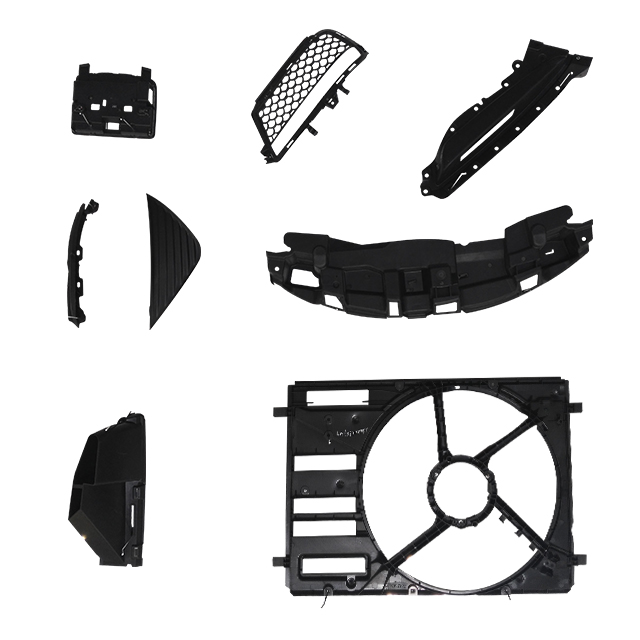
Basic certifications often fall short when assessing high-stakes manufacturing. The automotive industry operates on a stricter set of rules designed to systematically eliminate risk from the supply chain. You must understand these frameworks to navigate vendor selection safely.
IATF 16949 vs. ISO 9001: Standard ISO 9001 certification provides a solid foundation for general quality management. However, it is fundamentally insufficient for automotive injection molding. IATF 16949 builds upon ISO 9001 by introducing aggressive risk-management mandates. It requires continuous improvement, mandatory defect prevention strategies, and strict control over variations. An IATF-certified facility thinks proactively about failure, whereas a basic ISO facility might only react to it.
Comparison of ISO 9001 and IATF 16949 Standards
Standard | Primary Focus | Defect Strategy | Industry Application |
|---|---|---|---|
ISO 9001 | General Quality Management Systems (QMS) | Detection and basic correction | Broad cross-industry baseline |
IATF 16949 | Risk Mitigation and Process Capability | Prevention and statistical control | Strictly Automotive OEM supply chain |
The PPAP Requirement: The Production Part Approval Process (PPAP) is the cornerstone of automotive manufacturing approval. A complete PPAP package proves a supplier can consistently manufacture parts to specification at full production speeds. You must closely review process capability indexes, specifically Cp and Cpk. These statistical metrics prove long-term manufacturing stability. A Cpk of 1.33 or higher indicates a highly capable process where nearly zero parts will fall outside your tolerance limits.
FMEA (Failure Mode and Effects Analysis): FMEA is a structured approach used to discover potential failures before they happen. Top manufacturers perform both Design FMEAs (DFMEA) and Process FMEAs (PFMEA). They map out every conceivable way a tool could break or a process could drift. Then, they engineer safeguards directly into the workflow. If a specific mold cooling channel is likely to clog, the PFMEA dictates a mandatory preventative maintenance flush every 10,000 cycles.
Even the best quality plans encounter real-world friction. Experienced engineering teams recognize these trade-offs and manage them transparently.
Over-Tolerancing: Engineers sometimes over-engineer their blueprints. This poses a significant commercial risk. Demanding unnecessarily tight tolerances drives up tooling costs exponentially. It also extends cycle times and increases scrap rates. If a bracket simply holds a wire harness, demanding a +/- 0.01mm tolerance provides zero functional benefit. You must balance functional needs against manufacturing realities.
Tool Wear & Cavity Imbalance: Steel is not invincible. Multi-cavity molds experience degradation over high-volume runs. Gates erode, vents clog, and parting lines slowly flatten. This leads to cavity imbalance, where one part of the mold fills faster than the rest. You must demand strict preventative mold maintenance schedules. Routine cleaning, localized laser welding, and re-machining keep the tool running perfectly at cycle one million.
The Scalability Trap: Do not assume a successful prototype run guarantees high-volume success. A process yielding perfect prototypes might fail catastrophically at scale. Prototypes often use soft aluminum tooling or slow cycle times. In full production, thermal management becomes critical. If the cooling lines cannot extract heat fast enough during continuous 24/7 cycles, parts will warp upon ejection. Automation and thermal engineering must scale together.
Selecting a manufacturing partner is one of the most critical decisions your procurement team will make. You must move beyond glossy brochures and audit their actual operational maturity.
Audit their Traceability: Ask the vendor how they handle an unexpected field failure. Can they trace a finished component back to the exact machine operator? Can they identify the precise shift, the resin lot number, and the drying temperature from that specific day? Comprehensive ERP integration and barcode tracking are mandatory for rapid root-cause analysis.
Review their Corrective Action System (CAPA): Look for an evidence-oriented approach to problem-solving. Mature suppliers utilize the 8D (Eight Disciplines) methodology. They do not just write "operator error" on a clipboard and move on. They implement permanent engineering controls to ensure the defect is structurally prevented from ever recurring.
Assess their Measurement Equipment: Do their metrology capabilities match your tolerance requirements? If your print demands complex profile tolerances, the vendor cannot rely on hand-held calipers. They must possess advanced CMMs, optical comparators, and automated vision systems natively on their shop floor.
Red Flags to Watch For: Walk away if a vendor provides vague definitions of "acceptable defect rates." You should also watch out for a lack of automated segregation for rejected parts; relying on human operators to manually sort good from bad is a guaranteed path to failure. Finally, extreme resistance to transparently sharing Statistical Process Control (SPC) data indicates they either do not track it or they actively hide process instability.
Achieving highly reliable manufacturing operations requires a fundamental shift in perspective. You must transition from a reactive inspection mindset into a proactive, process-controlled methodology. When you anchor your operations in scientific molding, data-driven metrology, and strict compliance frameworks, you effectively engineer failure out of the equation.
Design robust tooling upfront to eliminate systemic processing issues.
Implement automated, in-cavity sensor technology to catch anomalies instantly.
Insist on comprehensive PPAP documentation to verify long-term statistical capability.
Demand end-to-end traceability to drastically reduce the scope of any potential recall.
Before advancing to the costly tooling phase with a new vendor, your procurement and engineering teams must take definitive action. Schedule a targeted quality audit and demand a sample PPAP package from their previous automotive projects. This due diligence ensures your partner possesses the true maturity required to protect your brand.
A: The automotive industry operates on a strict "zero defect" target driven by Parts Per Million (PPM) metrics. Depending on the component's criticality, top-tier manufacturers typically aim for sub-50 PPM. Safety-critical components often require a true zero-defect output, enforced through rigorous automated sorting.
A: Maintaining IATF 16949 certification increases initial overhead due to extensive documentation, auditing, and engineering requirements. However, it drastically reduces the hidden costs of scrap, rework, and liability. Ultimately, the slightly higher piece price prevents catastrophic downstream financial losses.
A: External cameras only detect visible cosmetic flaws. Internal cavity sensors monitor the unseen dynamics. They detect microscopic variations in material viscosity and pack density. This guarantees the internal structural integrity of the part remains consistent, preventing hidden weaknesses that lead to mechanical failure.


