


Views: 0 Author: Site Editor Publish Time: 2026-08-04 Origin: Site


Hardware development often feels like walking a tightrope. Engineers must balance mechanical strength against cosmetic requirements. You also need to manage production costs carefully during scale-up phases. Finding this equilibrium remains notoriously difficult for product teams today. Acrylonitrile Butadiene Styrene (ABS) serves as the standard baseline material for rigid, high-impact applications. It dominates the market for tough consumer and industrial goods. However, selecting this resin alone does not guarantee a successful product launch. Achieving consistent, warp-free results relies heavily on precision tooling. It also demands stringent quality control protocols from your chosen manufacturing partner. We designed this guide specifically for design engineers and procurement teams. It offers an objective, step-by-step evaluation path. We will help you validate ABS for your specific functional requirements. You will also learn how to vet the right manufacturing partner. This ensures you avoid common production pitfalls and scale smoothly.
Application Fit: ABS is optimal for high-impact, indoor durable plastic components but requires specific additives or alternative blends (like PC/ABS) for UV or high-heat exposure.
Design Realities: Proper Design for Manufacturability (DfM)—specifically uniform wall thickness and draft angles—is non-negotiable to prevent warping and sink marks in custom ABS parts.
Vendor Evaluation: Selecting a plastic injection molding service requires auditing their tooling steel grades, quality assurance (QA) frameworks, and part-to-print verification processes.
Cost vs. Yield: Tooling amortization dictates ROI; optimizing mold design upfront prevents expensive mid-production rework.
You must define what makes a component truly durable before cutting steel. Durability means different things across various industries. For consumer electronics, it might mean surviving a one-meter drop test. For industrial enclosures, it often involves resisting constant vibration. You need to establish these success criteria early in the development cycle. This clarity prevents over-engineering and keeps your budget intact.
Engineers consistently choose ABS injection molding for several proven reasons. The material offers exceptional impact strength and toughness. It handles sudden mechanical shocks better than many standard thermoplastics. Furthermore, ABS provides excellent machinability. It responds beautifully to secondary finishing processes like painting, electroplating, and gluing. Finally, the resin remains highly cost-effective for mid-to-high volume production runs. You get a premium feel without the premium price tag.
However, we must address the transparent assumptions regarding where ABS fails. No material does everything perfectly. Standard ABS exhibits poor weatherability. It degrades rapidly under prolonged UV exposure. Without protective coatings or UV stabilizers, outdoor parts will yellow and become brittle. Additionally, ABS has low solvent resistance. It remains highly vulnerable to specific chemicals, greases, and oils. If your product lives in a machine shop, standard ABS might degrade.
If high heat or UV resistance is critical, you face an important decision node. We strongly advise evaluating alternative polymer blends. Below is a simple comparison chart to guide your material selection process.
Material | Best Use Case | Primary Weakness | Relative Cost |
|---|---|---|---|
Standard ABS | Indoor impact-resistant enclosures | UV degradation, low chemical resistance | Low |
PC/ABS Blend | High heat environments, premium electronics | Harder to mold, requires higher temps | Medium |
ASA | Outdoor equipment, automotive parts | Lower impact strength than ABS | Medium-High |
Best Practice: Always test material coupons in your actual operating environment. Do not rely solely on data sheet specifications.
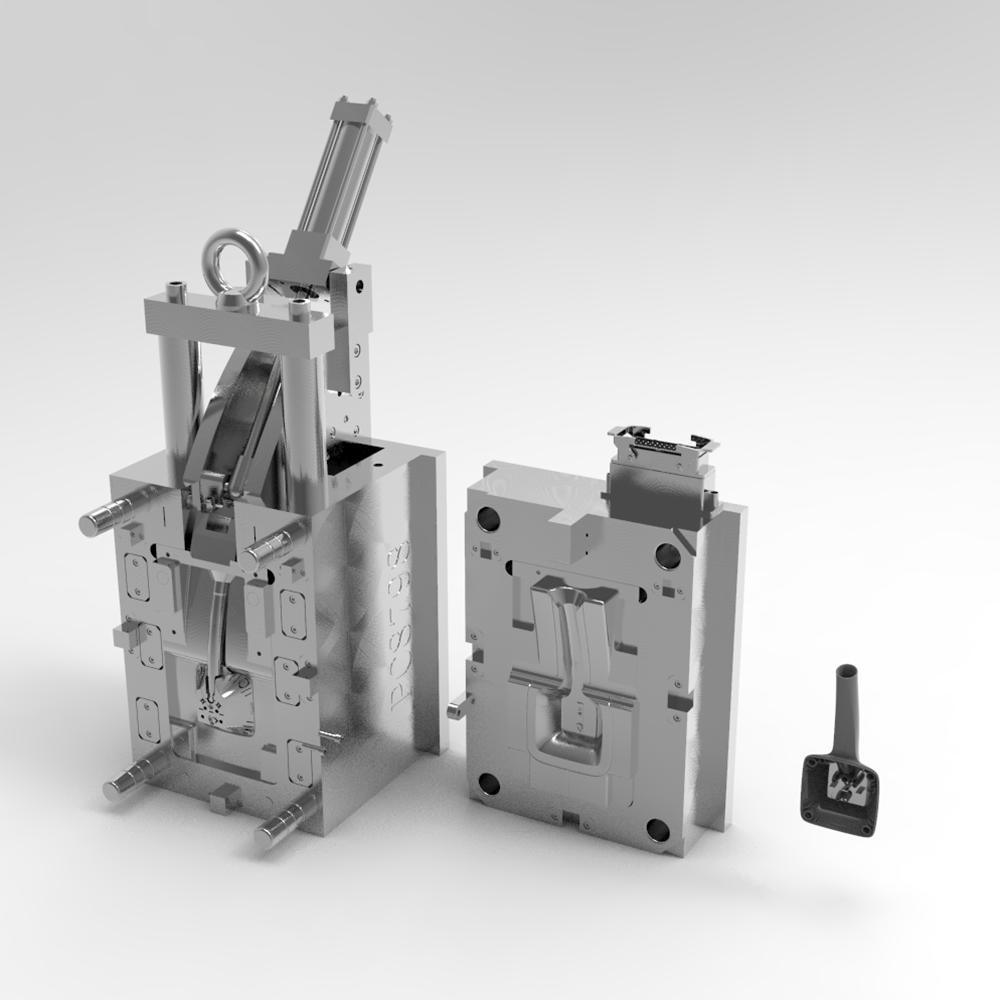
Addressing the physical realities of the molding process separates successful projects from costly failures. Proper Design for Manufacturability (DfM) reduces physical stress on custom ABS parts. We must respect how molten plastic flows and cools. Ignoring these rules guarantees cosmetic defects and structural compromises.
You must maintain uniform wall thickness throughout your design. Standard ABS parts typically perform best with a nominal thickness between 1.5mm and 3mm. Uniformity ensures the plastic cools at a consistent rate. When thick sections cool slower than thin sections, they shrink more. This uneven shrinkage pulls the surrounding material, causing warped geometries.
We often need to add strength to a part without thickening the main walls. Ribbing provides the perfect solution. However, you must limit rib thickness carefully. Keep rib thickness to roughly 60% of the nominal wall thickness. If you make ribs too thick, you will see visible sink marks on the cosmetic side of your part.
You cannot eject a perfectly vertical part from a steel mold without severe friction. You must standardize your draft angles early in the CAD phase. Follow these numbered rules for optimal ejection:
Apply a minimum draft angle of 1° to 2° for all untextured vertical walls.
Increase the draft angle by an additional 1.5° for every 0.025mm of surface texture depth.
Ensure draft angles align perfectly with the mold's direction of pull.
Additionally, you must apply generous radii at all internal corners. Sharp corners create severe stress concentrations. These concentrations act as common failure points in rigid plastics. A smooth radius allows molten ABS to flow easily into cavity extremities.
All thermoplastics shrink as they cool. Standard ABS exhibits a predictable shrinkage rate, typically ranging from 0.4% to 0.9%. Tool designers must calculate for this specific shrinkage rate before finalizing the mold dimensions. They cut the steel slightly larger than the final part requirements. If your vendor calculates this poorly, you will never hit your required tight tolerances. Always discuss expected shrinkage rates during the initial DfM review.
Producing a solid part represents only half the battle. You must also treat the parts post-molding to meet end-user cosmetic expectations. Understanding your solution categories helps you budget effectively for custom ABS injection molding parts.
Surface finishes dictate the final tactile and visual experience of your product. The plastics industry uses standard SPI (Society of the Plastics Industry) finish grades. ABS responds exceptionally well to mold texturing. You can achieve a flawless mirror polish or a rugged, grippy texture.
SPI Finish Grade | Mold Tooling Method | Typical Application |
|---|---|---|
SPI-A1 (High Gloss) | Grade #3 Diamond Buff | Lenses, highly cosmetic consumer housings |
SPI-B2 (Semi-Gloss) | 400 Grit Paper | Standard internal components, subtle exteriors |
SPI-C1 (Matte) | 600 Stone | Industrial parts hiding minor molding marks |
SPI-D3 (Textured) | Dry Blast (Glass Bead) | Handheld devices requiring tactile grip |
Beyond surface finishes, ABS supports robust post-processing capabilities. You can utilize ultrasonic welding for complex assemblies. This process melts the plastic locally, creating a permanent, watertight joint without adhesives. For electronics, we frequently apply EMI/RFI shielding. You can easily metallize or plate ABS enclosures to block electromagnetic interference. Furthermore, ABS accepts pad printing and silk screening beautifully for brand logos and safety warnings.
You must also monitor compliance considerations. Ensure any secondary coatings meet necessary global regulations. The base resin and the paint must pass RoHS and REACH standards for your target market. If your device involves high voltage, verify the required UL94 flammability ratings. Many engineers specify flame-retardant ABS (FR-ABS) to meet these strict safety codes.
Choosing the right manufacturing partner dictates your project's ultimate success. You must look beyond just the lowest per-part cost. Evaluating a vendor requires a deep dive into their engineering culture and technical transparency. When sourcing OEM plastic parts, follow these strict evaluation dimensions.
You must differentiate between prototype tools and true production tools. Prototype molds often utilize aluminum. They cut quickly and cost less, but they degrade after a few thousand shots. For long-term production, demand P20 or H13 hardened steel. H13 steel can easily produce over 500,000 cycles without dimensional degradation. Require your vendor to provide written transparency regarding mold guarantees and expected lifespan.
A reputable plastic injection molding service proves their reliability through data. Look for ISO 9001 certification as a baseline indicator of organized management. However, you must dig deeper. Require First Article Inspection (FAI) reports for your initial samples. An FAI verifies every single dimension on your 2D print against the physical part. Additionally, ask for capability studies (CPK) for your most critical dimensions. A high CPK proves their molding process remains stable over thousands of continuous cycles.
A credible partner never blindly accepts your CAD file. They provide automated and engineer-reviewed DfM analysis before cutting any steel. They should identify mold flow issues proactively. They will warn you about poor gate placement risks. If a vendor does not push back on flawed designs, they lack the expertise you need. Treat a rigorous DfM review as a major positive signal during your vetting process.
Understanding where your money goes helps you optimize your return on investment. The relationship between upfront tooling costs and piece-part pricing forms the core of your budget strategy. We can break this down into clear scalability mapping.
Complex geometries drastically increase upfront mold costs. If your design features undercuts, the tool requires side-actions or lifters. These mechanical mold components slide out of the way before ejection. They add significant engineering hours and machining costs. However, side-actions allow you to consolidate multiple parts into one feature-rich component. This consolidation often saves money on downstream assembly labor.
Conversely, multi-cavity molds increase your initial upfront investment but drastically lower the piece-part price. If you mold four parts simultaneously, your machine time per part drops exponentially. You must calculate your annual volume carefully to justify a multi-cavity tool.
Material sourcing heavily impacts your pricing stability. Bulk resin purchasing allows large molders to offer better piece-part rates. You must also understand the risks associated with material traceability. If a vendor lacks strict supply chain controls, you might end up with counterfeit resin. Worse, they might sneak excessive regrind material into your high-performance parts. Always demand certificates of analysis (CoA) for your raw materials. This ensures your durable plastic components meet the exact physical properties you originally specified.
Validate Material Limits First: Ensure standard ABS meets your UV, thermal, and chemical resistance needs before proceeding.
Finalize DfM Rigorously: Lock in uniform wall thicknesses, appropriate draft angles, and safe rib ratios to prevent cosmetic and structural defects.
Audit Supplier Quality Frameworks: Verify your manufacturing partner uses certified steel, provides detailed FAI reports, and demonstrates high CPK scores.
Review Production Costs Holistically: Balance the high upfront cost of complex or multi-cavity tooling against long-term piece-part savings.
Your next step requires turning these concepts into actionable data. We recommend uploading your 3D CAD file for a comprehensive DfM analysis. Engaging engineers early provides a risk-free evaluation phase. It highlights hidden geometry issues before you commit significant capital to tooling.
A: Realistic timelines depend entirely on mold complexity. Expect 2 to 4 weeks for initial tooling fabrication. Afterward, you will typically wait 1 to 2 weeks for T1 (first test) samples. Highly complex tools requiring side-actions may extend lead times by several weeks.
A: Yes, up to 10-20% regrind is often acceptable for non-critical, internal parts. However, high-performance OEM parts require 100% virgin resin. Excessive regrind severely compromises the mechanical integrity and impact resistance of the final product.
A: Warping almost always stems from poor upfront DfM. The primary root causes include uneven wall thickness, inadequate mold cooling times, or poor gate locations. Addressing these physical realities during the CAD phase eliminates warping before production begins.
A: Standard ABS is generally not FDA-compliant for direct food contact. It is also unsuitable for implantable medical devices. For those strict applications, you should direct your material selection toward specialized medical-grade resins like PC or PEEK.


