


Views: 0 Author: Site Editor Publish Time: 2026-04-15 Origin: Site


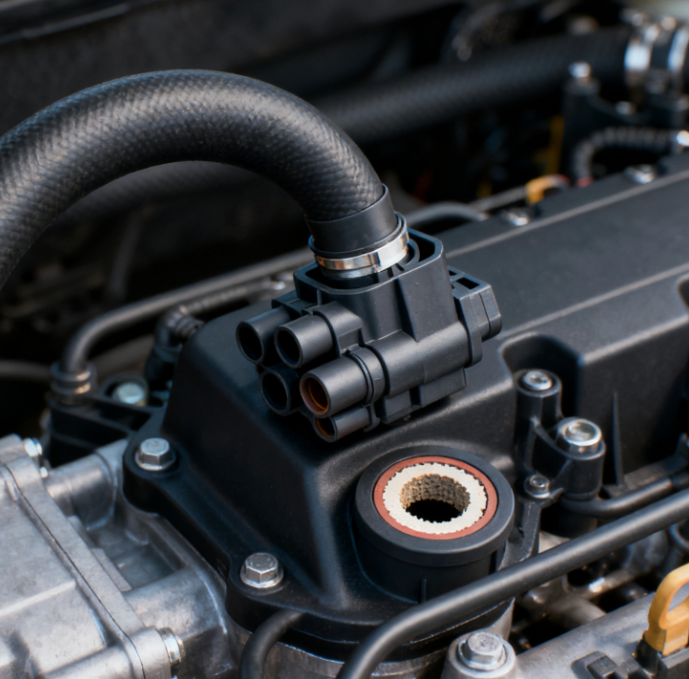
The relentless push for lightweighting, fuel efficiency, and extended EV range has fundamentally changed modern automotive engineering. Polymers have evolved from decorative afterthoughts into structural necessities. Automakers now rely on advanced plastics to meet strict emission and performance targets. They require materials capable of matching metal in durability while drastically cutting vehicle mass.
Procurement teams and engineers face a distinct reality when launching new vehicles. Achieving platform-scale production demands manufacturing methods capable of balancing extreme repeatability and complex functional integration. You cannot scale production if every component requires distinct manual assembly. Engineers need a predictable, automated process to supply global assembly lines.
Injection Molding stands out as the definitive process for scaling complex automotive parts efficiently. It translates digital CAD designs into millions of physical parts flawlessly. However, we must establish a transparent baseline early on. This process requires significant upfront Design for Manufacturing (DFM) and substantial tooling investment before you see a return.
Scale and Unit Economics: Injection molding achieves unparalleled cost-efficiency at high volumes (typically >10,000 units), bringing per-part costs down to pennies after tooling amortization.
EV & Lightweighting Enablement: Replaces heavy metal assemblies with advanced composites, directly increasing electric vehicle battery range and improving structural integrity.
Functional Integration: Reduces BOM (Bill of Materials) complexity by combining structural supports, housings, and mounting features into single molded parts.
Upfront Rigidity: High initial tooling costs and strict design constraints mean prototype validation (via 3D printing/CNC) is mandatory before committing to steel molds.
Platform-based vehicle manufacturing requires millions of identical parts without variance. Automakers use single chassis platforms across multiple vehicle models. They need components to fit perfectly every time. If a part varies by a fraction of a millimeter, assembly lines stop. Injection molding solves this variance problem entirely.
You must weigh unit economics against upfront capital. Steel molds require high initial capital expenditures. Costs easily range from $5,000 to over $100,000 per mold. However, scale economics completely justify this investment. Modern presses run cycle times of 15 to 30 seconds. Once you amortize the tooling cost, the price per part drops to pennies. It remains the only viable solution for mass production.
Engineers heavily rely on molding for functional integration. They design one complex part to replace a multi-part metal assembly. A single molded component can manage airflow, route wiring, and support snap-fits. This consolidation drastically reduces Bill of Materials (BOM) complexity. Fewer parts mean easier inventory management and faster assembly.
Tolerances and repeatability drive automotive quality. Standard injection molding achieves tolerances of ± 0.500 mm. For critical precision components, engineers push these boundaries to ± 0.125 mm. This level of accuracy guarantees watertight seals and secure mechanical fits over millions of production cycles.
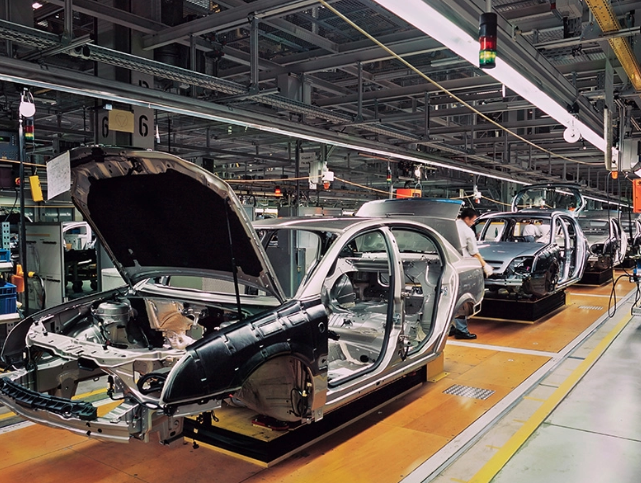
We can map injection molding applications directly to the physical architecture of a vehicle. This makes it easier to understand how plastics replace traditional materials across different automotive systems.
Vehicle System | Common Components | Primary Engineering Focus |
|---|---|---|
Interior Components | Dashboards, door panels, center consoles, instrument clusters | Aesthetics, scratch resistance, impact absorption, passenger safety. |
Exterior Parts | Bumpers, grille assemblies, mirror housings, trim panels | UV stability, weatherability, aerodynamic shaping, paint adhesion. |
Under-the-Hood | Intake manifolds, cooling fan housings, heat shields, engine covers | High thermal limits, chemical resistance, stiffness, vibration dampening. |
Electrical & Fluid | Sensor housings, wiring connectors, brake fittings, coolant reservoirs | Watertight sealing, dimensional stability, electrical insulation. |
Interior components demand high aesthetic quality and impact resistance. Dashboards and door panels must withstand daily wear while protecting passengers during collisions. We use specific resin blends to prevent interior glare and resist scratching.
Exterior parts face harsh environmental conditions. Bumpers and mirror housings require exceptional UV stability and weatherability. They must endure freezing temperatures and scorching heat without cracking or fading.
Under-the-hood applications push polymers to their absolute limits. Intake manifolds and heat shields operate in extreme heat. They require high thermal limits and continuous chemical resistance against oils and coolants.
Electrical and fluid systems prioritize safety and sealing. Sensor housings and wiring connectors need perfect dimensional stability. A microscopic warp could allow moisture ingress, resulting in electrical failure. Injection molding provides the watertight precision these systems require.
Modern automotive trends require specialized molding techniques. Smart cars and EVs demand lighter parts, better ergonomics, and complex electronic integrations.
Overmolding involves molding a soft-touch thermoplastic elastomer (TPE) over a rigid plastic substrate. Automakers use it extensively for interior ergonomics. You will find overmolded parts on steering wheel controls, shift knobs, and door handles. It also creates excellent vibration-dampening seals for HVAC systems. This technique eliminates the need for toxic adhesives during assembly.
Insert molding encapsulates metal components directly within the plastic during the injection cycle. Engineers place threaded inserts or electronic contacts into the mold before the resin flows. This technique is absolutely critical for EV battery connectors and Advanced Driver Assistance Systems (ADAS). It creates a seamless, robust bond between metal conductors and insulating plastics.
Gas-assisted injection molding hollows out thick sections of parts. The machine injects a controlled volume of nitrogen gas into the molten plastic. This forces the material against the mold walls. We use this for thick door handles and interior grab bars. It reduces overall weight and saves material. Crucially, it prevents aesthetic defects like sink marks without sacrificing structural rigidity.

We must candidly address the drawbacks of the injection molding process. Understanding these limitations establishes a realistic production timeline and prevents costly engineering mistakes.
Tooling costs and lead times are significant hurdles. Machining custom steel molds takes anywhere from 6 to 12 weeks. You are buying a permanent asset. We operate under a "steel-safe" rule for mold modifications. Removing metal from the mold to add plastic to your part is possible. However, adding metal to the mold to thin out a part is incredibly difficult and expensive. You must finalize designs before cutting steel.
Engineers face strict DFM constraints when designing for this process. These rules are non-negotiable.
Draft Angles: You must apply a slight taper (draft) to vertical walls. This allows the part to eject from the mold without scraping.
Uniform Wall Thickness: Thick sections cool slower than thin sections. This differential cooling causes sink marks and warping. Keep walls uniform.
Avoid Undercuts: Undercuts trap the part inside the mold. Removing them requires expensive side-action cams or lifters, which increases tooling costs.
You should know when to use alternative manufacturing methods. If you only need a few hundred parts, do not buy a steel mold. We recommend CNC machining or industrial 3D printing (FDM/SLS) for early-stage rapid prototyping. These methods validate your design cheaply before you commit capital to high-volume tooling.
Do not skip mold-flow analysis. Skipping this step often results in improper gate placement. Poor gating causes weld lines in visible cosmetic areas. Always simulate the injection process digitally before manufacturing the physical mold.
Automotive safety and environmental standards demand industrial-grade polymers. You cannot use generic plastics for vehicle manufacturing. Material selection dictates part performance, longevity, and regulatory compliance.
Polypropylene is lightweight and highly chemical resistant. It serves as the default choice for automotive bumpers, fenders, and fluid reservoirs. It withstands exposure to battery acids, oils, and road salts. Its low density helps automakers shed significant vehicle weight.
ABS provides exceptional impact resistance and dimensional stability. We consider it the industry standard for dashboards, interior trim, and wheel covers. It also accepts paint and metallic plating easily, making it perfect for branded interior elements.
Polycarbonate offers unparalleled transparency and extreme toughness. It resembles glass but possesses much higher impact resistance. Automakers heavily use PC for headlight lenses, exterior lighting housings, and sunroof components. It requires specialized UV-resistant coatings to prevent yellowing over time.
Engineers rely on glass-filled or carbon-filled polyamides (PA/Nylon) for structural replacements. These composites replace heavy aluminum under the hood. They offer mandatory high tensile strength and heat deflection temperatures. You will see these materials in intake manifolds, engine covers, and pedal boxes.
Selecting the right manufacturing partner dictates the success of your automotive program. You need a vendor evaluation framework to filter out unqualified suppliers. Look for partners capable of true automotive-grade execution.
First, evaluate their experience manufacturing industrial custom plastic molds. Assess their specific tooling strategy. Do they offer aluminum bridge tooling for initial low-volume runs? Can they guarantee hardened steel molds rated for over 100,000 life cycles? Your partner must align their tooling capabilities with your expected production volume.
Quality assurance and industry certifications are mandatory. You must require ISO 9001 certification at a minimum. For tier-one automotive supply, insist on IATF 16949 compliance. Look for facilities utilizing automated Coordinate Measuring Machine (CMM) inspection. They should also possess in-house mold-flow simulation capabilities to predict defects before they happen.
Finally, examine their end-to-end capabilities. A reliable plastic injection molding company should offer more than just mold pressing. They must provide integrated DFM consulting during your design phase. Look for partners offering in-house tooling maintenance and secondary operations. Secondary services like ultrasonic welding, pad printing, and sub-assembly streamline your supply chain and reduce logistical headaches.
Injection molding remains the absolute backbone of automotive scaling. It offers an irreplaceable mix of lightweighting capabilities, complex geometry realization, and long-term cost reduction. As the industry transitions to electric vehicles, replacing heavy metal components with advanced polymers becomes a baseline requirement rather than an optional upgrade.
Procurement leads and automotive engineers must adapt their workflows. Initiate DFM reviews as early as possible in your design phase. Waiting until the design is locked often creates severe tooling bottlenecks and delays vehicle launch timelines.
Take action on your next automotive program today. Submit your CAD files to a qualified manufacturing partner. Request a comprehensive feasibility analysis, actionable DFM feedback, and a detailed tooling quote to get your project moving in the right direction.
A: Generally 500–1,000 units for aluminum bridge tooling, and 10,000+ for steel production molds.
A: By replacing metal parts with high-strength polymer alternatives, drastically reducing vehicle weight to offset battery mass and extend driving range.
A: Aluminum molds yield 5,000 to 20,000 cycles, while high-grade steel molds are rated for 100,000 to over 1 million cycles depending on the abrasiveness of the resin.


