


Views: 0 Author: Site Editor Publish Time: 2025-09-29 Origin: Site


Car molded parts are made by shaping plastic into precise components used throughout vehicles. From dashboards and bumpers to headlights and engine covers, this process transforms raw plastic pellets into functional, durable parts. Molding is central to modern automotive production because it combines efficiency, repeatability, and design flexibility.
Cars were initially heavy and mostly metal. The arrival of plastics in the 1940s allowed lighter, more versatile components. Decorative trims appeared in the 1970s, followed by functional exterior parts like bumpers and fenders in the 1980s. By the 2000s, structural plastic components reduced weight and improved fuel efficiency. Today, car molded parts are standard in almost every vehicle system, from interiors to under-the-hood components.
Crafting car molded parts is a meticulous process that demands precision and expertise at every stage. Here’s an in-depth look at the key steps involved in forming these critical components:
The journey begins with the preparation of the plastic material. Plastic pellets or granules are carefully dried to eliminate any moisture content, a crucial step to prevent defects such as bubbles or warping that could compromise the part’s integrity. To achieve the desired properties, dyes, stabilizers, or other additives are blended into the plastic mix. This ensures that the final product not only meets the required color and durability standards but also performs as intended under various conditions.
With the material prepared, the next phase involves heating it until it reaches a molten state. The molding machine then injects this molten plastic into the mold cavity under high pressure. This step is critical for ensuring that the plastic thoroughly fills all cavities and intricate features of the mold.
High-pressure injection is essential for filling thin walls and detailed designs, ensuring that even the most complex parts are formed with precision.
Multi-cavity molds are often used to increase efficiency, allowing for the simultaneous formation of multiple parts in a single cycle.
Advanced techniques like gas-assisted molding are employed to reduce material use and enhance part strength, making the process more sustainable and cost-effective.
Following injection, the mold channels are circulated with coolant to facilitate the solidification of the plastic. The duration of this cooling phase depends on several factors, including the type of material used, the thickness of the part, and the specific design of the mold. Proper cooling is vital to prevent issues such as warping, shrinkage, or deformation, which could affect the part’s functionality and appearance.
Once the part has solidified, it’s time for ejection. Ejecting pins or plates are used to remove the part from the mold. This marks the transition to post-processing, where several additional steps may be undertaken to refine the part:
Trimming excess material to achieve precise dimensions and a clean finish.
Surface finishing or texturing to enhance the part’s appearance and tactile quality.
Assembly of multi-part components, where individual molded parts are combined to form a complete assembly.
| Step | Description | Key Notes |
|---|---|---|
| Material Prep | Drying and mixing pellets | Ensures uniform color & prevents defects |
| Injection | Molten plastic fills mold | High pressure fills complex shapes |
| Cooling | Solidification in mold | Prevents warping or shrinkage |
| Ejection & Post | Part removal and finishing | Includes trimming, surface texture, assembly |
Throughout this process, quality control measures are rigorously applied to ensure that each part meets the stringent standards required by the automotive industry. This attention to detail at every stage of the process is what sets high-quality car molded parts apart, contributing to the safety, performance, and aesthetics of vehicles on the road today.
The world of car molded parts is continuously evolving, with advanced features that enhance both the manufacturing process and the final product’s quality. Here’s a closer look at some of these innovative techniques:
Multi-shot molding is a sophisticated process that allows for the formation of parts with different colors or materials within a single production cycle. This method is particularly useful for creating components that require a combination of aesthetics and functionality, such as dashboards with integrated controls.
Gas-assisted molding is a technique that reduces material use and enhances the strength of parts with thick sections. By injecting a thin stream of gas into the molten plastic, it allows for better material distribution and cooling, resulting in lighter and stronger components.
Insert molding is a versatile process that embeds metal or electronic inserts directly into the plastic parts. This is especially valuable for parts that require additional structural support or electrical conductivity, ensuring that the final product is both durable and functional.
Incorporating molded textures and patterns directly into the part eliminates the need for extra finishing steps and significantly improves the product’s aesthetics. This feature is particularly beneficial for exterior components that contribute to the vehicle’s visual appeal.
Precision and consistency are paramount in the production of car molded parts. Rigorous quality measures are implemented to ensure each component meets the highest standards:
Dimensional inspections are conducted to verify that parts adhere to specified tolerances. Tools like calipers or 3D scanners are used to ensure that every dimension is within the acceptable range.
Surface inspections are crucial for identifying any defects such as scratches, voids, or sink marks. These inspections help maintain a high-quality finish on the parts, which is essential for both safety and appearance.
Functional tests are performed to ensure that moving parts, vents, or clips operate correctly. These tests are vital for verifying that the parts will perform as intended in the vehicle.
Stress testing involves subjecting parts to impact or heat conditions that simulate real-world scenarios. This helps to validate the durability and reliability of the components under various conditions.
Proper quality control is essential for ensuring the safety, performance, and aesthetics of every car molded part, contributing to the overall quality and reliability of the vehicle.
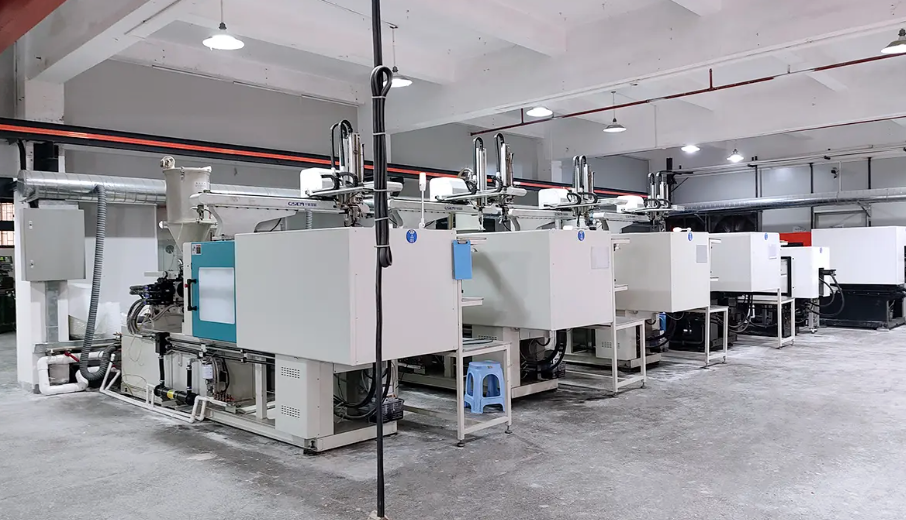
Car molded parts have a profound impact on vehicle design and performance, offering several advantages:
Molded parts contribute to reducing vehicle weight by utilizing lightweight materials. This weight reduction directly translates to improved fuel efficiency and reduced emissions.
Precision molding ensures that parts fit perfectly, enhancing the assembly process. This leads to better safety and durability, as components are more securely integrated into the vehicle’s structure.
Molded parts allow designers greater creative freedom, enabling the incorporation of integrated features like clips, vents, and ergonomic designs. This shapes how modern cars look and perform, offering both functional and aesthetic benefits.
They are made by heating plastic pellets until molten, injecting the plastic into a mold under high pressure, cooling it to solidify, and then ejecting the part. Post-processing steps such as trimming, surface finishing, or assembly may follow.
Injection molding allows high-volume production with excellent repeatability, intricate designs, and consistent quality. It reduces production time and cost for large batches while enabling advanced features like multi-material parts or integrated textures.
Yes. Rapid tooling or small-run molds can produce prototypes for testing. However, 3D printing or CNC machining is often used for very low-volume prototypes because it avoids expensive molds.
Quality is ensured through dimensional inspections, surface checks, functional tests, and stress testing. These measures guarantee durability, safety, and performance before parts are integrated into vehicles.
Molded parts reduce weight, improve fuel efficiency, simplify assembly, and give designers flexibility to create integrated features. They also enhance both functionality and aesthetics.
Car molded parts play a critical role in modern automotive manufacturing, combining precision, efficiency, and design versatility. From functional under-the-hood components to stylish interiors and safety-critical exterior parts, molding has transformed how vehicles are built.
At Dongguan Quanhao Plastic Mold Co., Ltd., we specialize in producing high-quality car molded parts using advanced injection molding technologies. Our expertise ensures consistent, durable, and precisely engineered components that meet modern automotive standards, helping manufacturers create safer, lighter, and more efficient vehicles.


