


Views: 0 Author: Site Editor Publish Time: 2025-10-01 Origin: Site


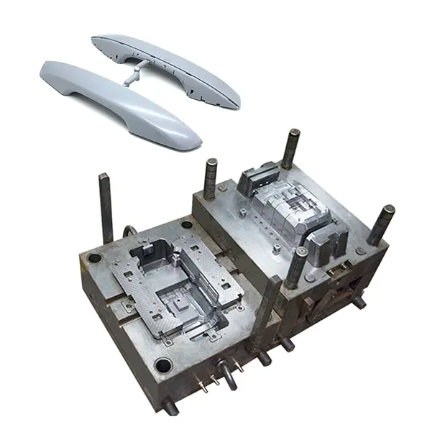
Injection molding is a pivotal manufacturing process widely used for producing complex plastic components with high precision and consistency. It involves a series of meticulously controlled stages that transform raw plastic materials into finished products. Understanding the intricacies of each phase is crucial for optimizing production efficiency and product quality. This article delves deep into the four fundamental stages of injection molding, providing a comprehensive exploration of each step in the process.
In the realm of modern manufacturing, injection molding plays an indispensable role. Its applications span across various industries, including automotive, medical devices, consumer electronics, and more. By dissecting each stage of the injection molding process, manufacturers and engineers can enhance their understanding, leading to innovations and improvements in product development.
The clamping stage is the initial phase of the injection molding process. It involves securely closing the two halves of the mold to withstand the high pressures generated during injection. The mold consists of a stationary platen and a movable platen. The clamping unit's primary function is to ensure the mold remains closed and aligned throughout the process to prevent any material leakage and to maintain the integrity of the final product's dimensions.
Modern clamping systems employ hydraulic or mechanical toggle mechanisms to achieve the necessary clamping force. The selection of the clamping method depends on factors such as the required clamping force, mold size, and production speed. Precise control of the clamping force is essential; insufficient force can lead to flash defects, while excessive force may damage the mold or the machine.
The design of the clamping system must also consider thermal expansion and contraction of the mold materials. Incorporating features like uniform clamping pressure distribution and mold alignment mechanisms enhances the quality of the molded parts. Furthermore, advanced injection molding machines feature real-time monitoring systems that adjust clamping parameters dynamically, ensuring optimal performance throughout production cycles.
The injection stage involves the introduction of molten plastic into the mold cavity. This phase starts with the plastic granules being fed into the injection molding machine's hopper. The granules are then conveyed to the heating barrel where they are heated and melted by the screw's rotation and external heaters. The temperature profile must be meticulously controlled to ensure the plastic reaches the optimal viscosity for injection.
The molten plastic is injected into the mold cavity through the nozzle under high pressure. The injection speed and pressure are critical parameters that influence the flow of the plastic, filling of the mold, and the eventual properties of the molded part. The goal is to fill the mold cavity completely before the material begins to solidify, avoiding defects such as short shots or flow lines.
An in-depth understanding of rheological properties of plastics is essential during this stage. Adjustments in screw speed, backpressure, and injection speed can significantly affect the material's flow characteristics. Advanced simulation software is often employed to predict flow patterns and optimize injection parameters, reducing the need for trial-and-error adjustments and minimizing material waste.
The cooling stage is where the molten plastic solidifies within the mold, forming the final shape of the product. Cooling accounts for a significant portion of the total cycle time and directly impacts production efficiency and part quality. Effective cooling ensures dimensional accuracy and prevents defects such as warping or internal stresses.
Mold design plays a vital role in the cooling stage. Incorporating uniform cooling channels within the mold facilitates consistent heat removal from the plastic part. The coolant, often water or oil, circulates through these channels, absorbing heat from the plastic. The temperature and flow rate of the coolant must be carefully regulated to achieve uniform cooling rates across the part.
Advanced cooling techniques, such as conformal cooling and the use of high-conductivity mold materials, have been developed to enhance cooling efficiency. Conformal cooling involves creating cooling channels that closely follow the geometry of the part, promoting uniform temperature distribution. Utilizing simulation tools to analyze thermal profiles helps in optimizing mold designs for better cooling performance.
Moreover, process parameters such as cooling time need to be optimized. Insufficient cooling time may result in parts that are too soft or deform upon ejection, while excessive cooling time reduces overall production efficiency. Balancing these aspects is key to achieving high-quality products and efficient manufacturing cycles.
The ejection stage is the final phase where the cooled, solidified part is removed from the mold. This is accomplished using an ejection system that may include ejector pins, plates, or air blasts. The design of the ejection system must ensure that the part is removed without causing damage or deformation.
Proper timing and force are critical in the ejection process. The mold must open at the precise moment when the part has cooled sufficiently to retain its shape but before any unnecessary delays that could affect cycle time. The ejection force must be enough to overcome any adhesion between the part and the mold surfaces but not so great as to cause marks or distortions.
In complex molds, features such as undercuts or threads may require specialized ejection mechanisms like unscrewing devices or collapsible cores. The use of mold release agents can also aid in the ejection of parts with intricate designs. Additionally, attention to surface finish and mold maintenance can reduce friction and facilitate smoother ejection.
Implementing sensors and automation in the ejection system can further enhance efficiency. Sensors can detect if a part has been successfully ejected, preventing the machine from cycling if a part remains in the mold. This not only protects the mold from damage but also reduces downtime and material waste.
Understanding the four stages of injection molding—clamping, injection, cooling, and ejection—is essential for anyone involved in the manufacturing industry. Each stage plays a critical role in determining the quality and efficiency of the production process. By meticulously controlling the parameters at each phase, manufacturers can produce high-quality components that meet stringent industry standards.
Advancements in technology, such as simulation software and automation, have significantly enhanced the injection molding process. These tools enable engineers to optimize designs and process parameters before physical trials, saving time and resources. The integration of real-time monitoring systems allows for adjustments on-the-fly, further improving product quality and reducing defects.
As industries continue to demand more complex and precise plastic components, the importance of mastering injection molding processes becomes ever more apparent. Companies specializing in injection molding are at the forefront of this technological advancement, providing innovative solutions to meet the evolving needs of various sectors.
In conclusion, a comprehensive understanding of the injection molding stages enables manufacturers to improve production efficiency, product quality, and ultimately, customer satisfaction. Continuous research and development in this field promise even more sophisticated techniques and technologies in the future, solidifying injection molding's role as a cornerstone of modern manufacturing.


